 comparison
What are the best Byrne and Jones alternatives for developers?
Last Updated: October 26, 2026
Quick Summary
Byrne and Jones alternatives for developers include commercial concrete contractors evaluated across five dimensions: scope definition, delivery model, capacity and schedule realism, contract and cost structure, and evidence from completed work. The right alternative depends on your project type, site conditions, timeline constraints, and risk allocation preferences.
- Normalize every bid to the same scope matrix before comparing prices, as exclusions like rebar or winter curing can hide true cost differences.
- Request a milestone schedule with pour dates and cure durations from each contractor to evaluate schedule realism and capacity.
- A slightly higher bid from a contractor with owned equipment and a credible schedule often costs less than a low bid that slips.
- Ask references specifically about schedule performance, change-order frequency, and how contractors handled unforeseen site conditions.
- Build 1-2 weeks of buffer time into your master schedule beyond contractor estimates to protect dependent phases.
Table of Contents
- Why Developers Need Concrete Contractor Alternatives
- How to Compare Commercial Concrete Contractors
- Key Criteria for Evaluating Byrne and Jones Alternatives
- Creating a Commercial Concrete Project Checklist
- Understanding Concrete Contractor Project Timeline Expectations
- What Sets Commercial Concrete Contractors Apart
- Getting Started with Your Concrete Contractor Selection
- Frequently Asked Questions
Why Developers Need Concrete Contractor Alternatives
Finding the right concrete contractor affects timelines, budget, quality, and your reputation with investors and end users. Byrne and Jones alternatives for developers exist because no single contractor fits every project type, timeline, or budget.
Contractors vary widely: some specialize in residential work, others in massive commercial foundations; some excel at quick turnarounds, others prioritize precision. Matching contractor to project separates successful developments from ones that run over budget and behind schedule.
At BK Concrete LLC, we work with developers across the Kansas City metro area on commercial foundations, site preparation, and grading. We've seen how the wrong contractor choice cascades into delays, cost overruns, and quality issues that surface after handoff.
This guide covers how to evaluate Byrne and Jones alternatives, what criteria matter for developer projects, and how to build a selection process that reduces risk and protects your timeline.
How to Compare Commercial Concrete Contractors
Most developers compare bids line by line and pick the lowest number. That fails for concrete, because the bid is only one part of the cost and schedule equation.
1. Scope definition and exclusions. Before comparing prices, confirm every bidder is pricing the same scope. Bids commonly exclude or qualify site prep, grading, excavation, rebar, vapor barriers, pumping, winter curing, testing, and spoil disposal.
2. Delivery model fit. Decide whether you need a design-build partner, a concrete subcontractor taking direction from a general contractor, or a standalone commercial specialist. Each model changes who carries design, coordination, and schedule risk.
3. Capacity and schedule realism. Capacity is not just crew size. Ask how many pours the contractor runs concurrently, what equipment they own versus rent, and how they staff finishing crews in peak season.
4. Contract and cost structure. Compare how each contractor prices work: lump sum, unit price, cost-plus with a fee, or time and materials. Lump sum transfers quantity risk to the contractor but usually carries a contingency.
5. Evidence from completed work. Ask for references from projects matching your scope, size, and site conditions, and ask specifically about schedule performance, change-order frequency, and how the contractor handled unforeseen site conditions.
| Comparison Dimension | What to Request From Each Bidder | Developer Risk It Controls |
|---|---|---|
| Scope definition | Written inclusions/exclusions matrix, allowances | Unbalanced bids, scope gaps, surprise add-ons |
| Delivery model | Description of role and risk allocation on past projects | Coordination gaps, unclear responsibility |
| Capacity and schedule | Milestone schedule, concurrent workload, owned equipment | Delays, crew shortages, compressed curing |
| Contract and cost | Pricing method, contingency, change-order markup | Cost overruns, disputed change orders |
| Completed-work evidence | References matching scope and site conditions | Quality defects, schedule slippage |
Request fixed price concrete quotes from each shortlisted contractor using the same scope matrix, and ask each to break out allowances and contingency separately. That step exposes more bid differences than any other part of the comparison.
Key Criteria for Evaluating Byrne and Jones Alternatives
Before comparing alternatives, clarify which Byrne and Jones the query refers to.
Once the entity and service line are clear, evaluate each alternative against the criteria that move a development project: land and site conditions, schedule and phasing, financing and carry cost, risk allocation, and project complexity.
Land and site conditions. Soil bearing capacity, groundwater, existing utilities, and access constraints drive foundation design and cost. A contractor experienced in your local soil and permitting environment will price site risk more accurately than a firm importing assumptions from another region.
Schedule and phasing. Concrete work sits on the critical path for most developments. Evaluate each alternative on sequencing pours around your phasing plan, curing and weather contingency assumptions, and track record of hitting milestone dates.
Financing and carry cost. Every week of delay carries financing cost. Compare alternatives on bid price and on the schedule risk each introduces.
Risk allocation. Clarify who carries design, quantity, site-condition, and weather risk under each proposed contract. Lump sum, unit price, cost-plus, and time-and-materials arrangements allocate these risks differently.
Project complexity. Match contractor capability to project complexity. A contractor who excels at repetitive flatwork may not fit a complex foundation with deep footings, post-tensioning, or tight urban access.
| Developer Criterion | Question to Ask Each Alternative | Why It Changes the Decision |
|---|---|---|
| Land and site conditions | How do you handle unsuitable soils, dewatering, and utility conflicts? | Drives foundation cost and schedule risk |
| Schedule and phasing | Can you provide a milestone schedule with pour dates and cure durations? | Concrete sits on the critical path |
| Financing and carry cost | What schedule assumptions are behind your price? | Delay cost can exceed bid differences |
| Risk allocation | Who carries design, quantity, site-condition, and weather risk? | Determines exposure to change orders |
| Project complexity | What is the most complex project you completed recently? | Capability must match project demands |
For commercial foundation work, learn how to avoid concrete contractor price escalation by selecting contractors who control site prep and can commit to a milestone schedule. That combination reduces both cost and schedule risk more than any single criterion.
Creating a Commercial Concrete Project Checklist
Before finalizing a contractor selection, build a project checklist covering the specifics of your development. It becomes your baseline for comparing bids and managing expectations.
Start with scope definition. Document foundation dimensions, concrete strength specifications (PSI rating), finishing requirements (smooth, broom finish, exposed aggregate), reinforcement details, site prep scope, and timeline constraints. Vague scope leads to scope creep and disputes.
Next, specify site conditions and access. Can the contractor access the site year-round? Are there utility lines or existing structures complicating access? Will weather or seasonal conditions affect scheduling?
Define quality standards explicitly. Will concrete be inspected by a third party? What testing is required? Are there specific finish standards or durability requirements? Contractors who know upfront what quality looks like bid more accurately and deliver more consistently.
Include timeline milestones. When does concrete need to be ready for next phases? Are there weather windows affecting scheduling? Can work proceed during winter? Contractors who understand your deadline constraints can sequence work and crew allocation accordingly.
Finally, document warranty and guarantee terms: what the contractor guarantees, for how long, and the process for addressing defects. Getting this in writing prevents disputes after work is complete.
Understanding Concrete Contractor Project Timeline Expectations
Timeline uncertainty is one of the biggest frustrations developers face with concrete contractors. Weather delays, site condition surprises, and crew availability all affect schedules. Understanding realistic timelines helps you plan dependent phases and manage stakeholder expectations.
Concrete work timelines depend on several factors. A 10,000-square-foot pad takes roughly 2-4 weeks from site prep through finishing; a 100,000-square-foot commercial flatwork project might take 8-12 weeks. But size alone doesn't determine timeline. Difficult soil, poor drainage, or utility conflicts add weeks.
Ask contractors for realistic timelines based on YOUR site conditions and project scope. Contractors who give aggressive timelines without understanding your specific situation are signaling that they may miss deadlines. Understand typical timelines and processes for commercial concrete projects by reviewing completed projects in similar conditions.
Watch out: Contractors who promise unrealistic timelines often cut corners on quality or site prep to meet them. A 2-week timeline for a complex foundation on difficult soil is a red flag.
Build buffer time into your master schedule. If a contractor estimates 6 weeks, plan for 7-8 weeks. This protects your dependent phases and reduces pressure on the concrete contractor to rush.
What Sets Commercial Concrete Contractors Apart
The difference between an excellent commercial concrete contractor and an average one often comes down to attention to detail in site preparation and execution discipline. Developers who understand this distinction make better contractor choices.
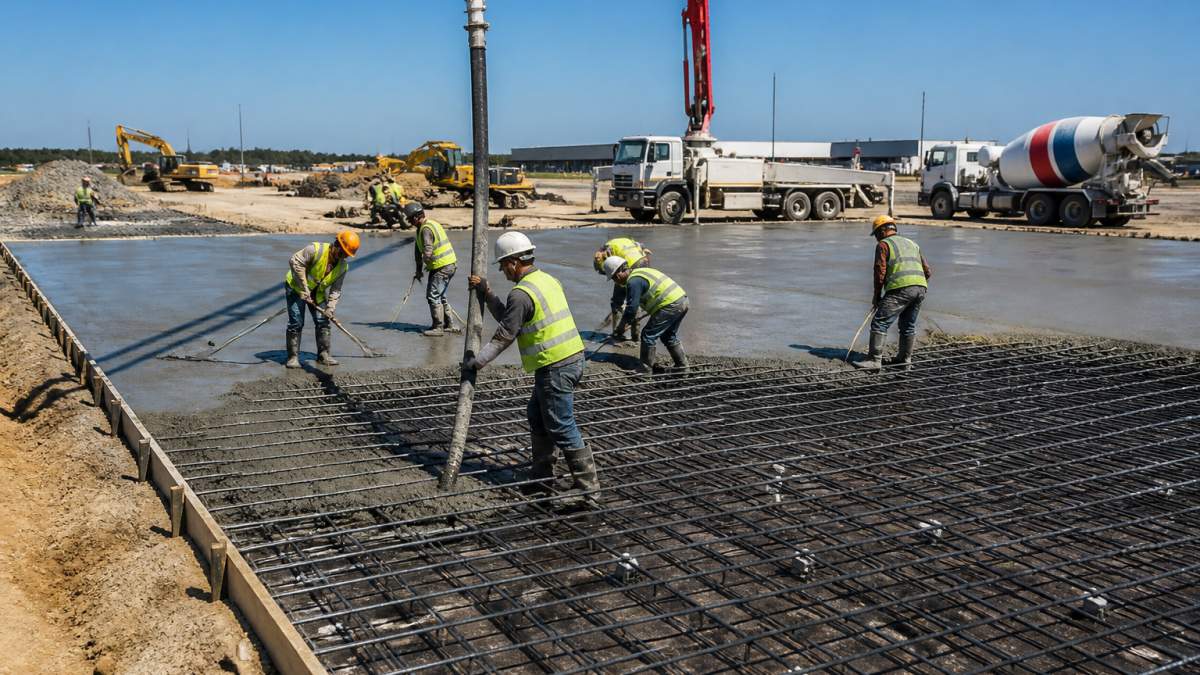
Top-tier contractors invest heavily in site prep. They understand that concrete quality depends entirely on the foundation beneath it. Poor grading, inadequate compaction, or improper drainage creates problems that surface years later.
They also maintain strict quality control during pouring and finishing. Temperature monitoring, proper curing time, and consistent finishing techniques separate contractors who deliver durable concrete from those who cut corners.
Communication discipline matters too. Contractors who provide regular updates, flag potential issues early, and coordinate proactively with other trades keep projects on track. Contractors who only communicate when problems arise typically have more problems.
Finally, excellent contractors maintain realistic expectations. They don't promise what they can't deliver. They communicate constraints upfront. They build schedules with buffer time. They understand that a developer's reputation depends on project delivery, and they treat your project accordingly.
Getting Started with Your Concrete Contractor Selection
Start your concrete contractor selection process early, ideally during design phases when you can incorporate contractor input into specifications and timelines. Early contractor involvement often surfaces practical issues that prevent costly redesigns later.
Develop a shortlist of 3-4 qualified contractors. Request detailed proposals that include scope breakdown, timeline with milestones, pricing structure, warranty terms, and references from similar projects. Don't just compare prices. Compare what each contractor is actually proposing to deliver.
Interview finalists. Ask specific questions about their approach to your project type, how they handle site conditions, their subcontractor relationships, and how they manage schedule risk. Listen for contractors who ask intelligent questions about your project, they're thinking through execution details.
Check references thoroughly. Talk to previous clients about whether timelines held, how the contractor handled unexpected issues, and whether they'd hire that contractor again. Honest feedback from developers who've worked with a contractor is worth more than any marketing material.
Selecting the right concrete contractor requires understanding your specific needs, evaluating contractors against relevant criteria, and building a selection process that reduces risk. BK Concrete LLC provides professional commercial and residential concrete services throughout the Kansas City metro area.
Frequently Asked Questions
What should developers look for in a Byrne and Jones alternative?
Developers should prioritize contractors with proven commercial project experience, transparent bid structures that break down materials and labor separately, and a clear project timeline. Verify that the contractor handles site preparation and reinforcement, not just concrete pouring. Ask for references from similar-scale projects completed on schedule and within budget. The best alternatives offer upfront cost estimation tools and detailed project plans before work begins.
How do you compare commercial concrete contractors using a bid comparison?
Request detailed bids from at least three contractors that itemize concrete contractor bid comparison elements: material costs, labor, site prep, equipment rental, and contingency allowances. Compare timelines alongside pricing, the cheapest bid often reflects rushed scheduling or cut corners. Verify that each contractor's scope of work matches your project requirements and that they specify concrete strength specifications and finishing standards.
What is a typical concrete contractor project timeline for commercial work?
A concrete contractor project timeline depends on project scale and site conditions. Small commercial pads typically require 2-4 weeks from site prep through curing. Larger foundations may take 6-12 weeks. Always factor in weather delays, permit approval time, and material delivery. Reputable contractors build in a contingency buffer and communicate delays early. Ask contractors to provide a detailed schedule that shows each phase: site preparation, formwork, pouring, curing, and finishing. This prevents surprises and helps you plan around the work.
How can developers verify a commercial concrete contractor's experience?
Request a portfolio of completed commercial projects with photos, project dates, and scope descriptions. Contact at least two references from similar projects and ask about schedule adherence, quality of finish, and how the contractor handled site challenges. Ask about their experience with your specific project type, multifamily, parking structures, industrial foundations.