 blog
Repair or Replace Your Concrete Foundation?
Last Updated: November 2, 2026
Quick Summary
Repair your concrete foundation when the damage is localized and the cause is fixable, such as a single crack or one wall issue. Choose replacement when the foundation can no longer carry the load above it, shown by widespread settlement, visible framing distortion, or a bowing wall with horizontal cracking.
- Cracks wider than a quarter inch or stair-step cracking through mortar joints are warning signs worth writing down.
- Caulking a crack hides the symptom and tells you nothing about whether movement is active.
- Repair usually wins on upfront cost and speed, while replacement wins on certainty when the structure is failing.
- A repair done as a cosmetic patch with no drainage correction tends to reopen within a few seasons.
- The cheapest bid is frequently the one that omits cause remediation or reinforcement.
Table of Contents
- Repair vs Replacement: The Decision That Saves or Costs You Thousands
- Signs of Foundation Damage That Point to Repair or Replacement
- What a Professional Foundation Inspection Actually Reveals
- Foundation Repair Cost: What Drives the Number Up or Down
- Foundation Replacement Cost and What the Bigger Job Involves
- Side-by-Side: Comparing Repair and Replacement on Cost, Longevity, and Disruption
- How Long Each Option Lasts and What Shortcuts Cost You Later
- Get a Foundation Assessment Before You Commit
- Frequently Asked Questions
Repair vs Replacement: The Decision That Saves or Costs You Thousands
Concrete foundation repair vs replacement is the most expensive concrete foundation judgment call a property owner can face, and the wrong choice is costly in both directions. Patch a failing foundation and you may pay twice. Tear out a structure that only needed targeted repair and you burn money you never had to spend. This guide walks through the signs, the inspection findings, and the cost drivers so you can decide with evidence instead of fear.
Here is the tension most guides skip: the decision rarely comes down to how bad the crack looks. It comes down to whether the foundation's structure can still do its job. A hairline crack in a poured wall and a stair-step crack in a block wall can look equally alarming and mean completely different things.
Below, we'll show you exactly how to read those signals, what a professional inspection actually measures, and how the numbers break down on both sides. The goal is simple: know which option you're facing before anyone quotes you a price.
Signs of Foundation Damage That Point to Repair or Replacement
Signs of foundation damage fall into two groups: cosmetic movement that repair can address and structural failure that points toward replacement. The distinction matters more than the severity of any single crack. A wide crack in a stable wall is often a repair job; a narrow crack paired with bowing is not.
Warning Signs You Can Spot Yourself
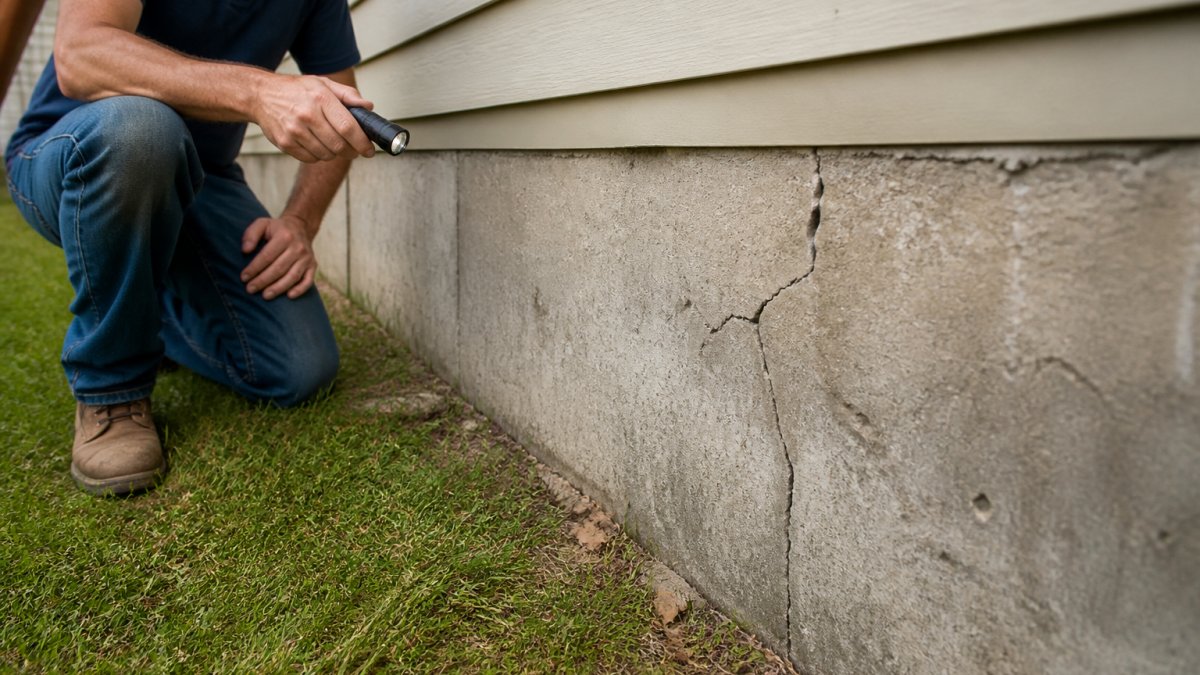
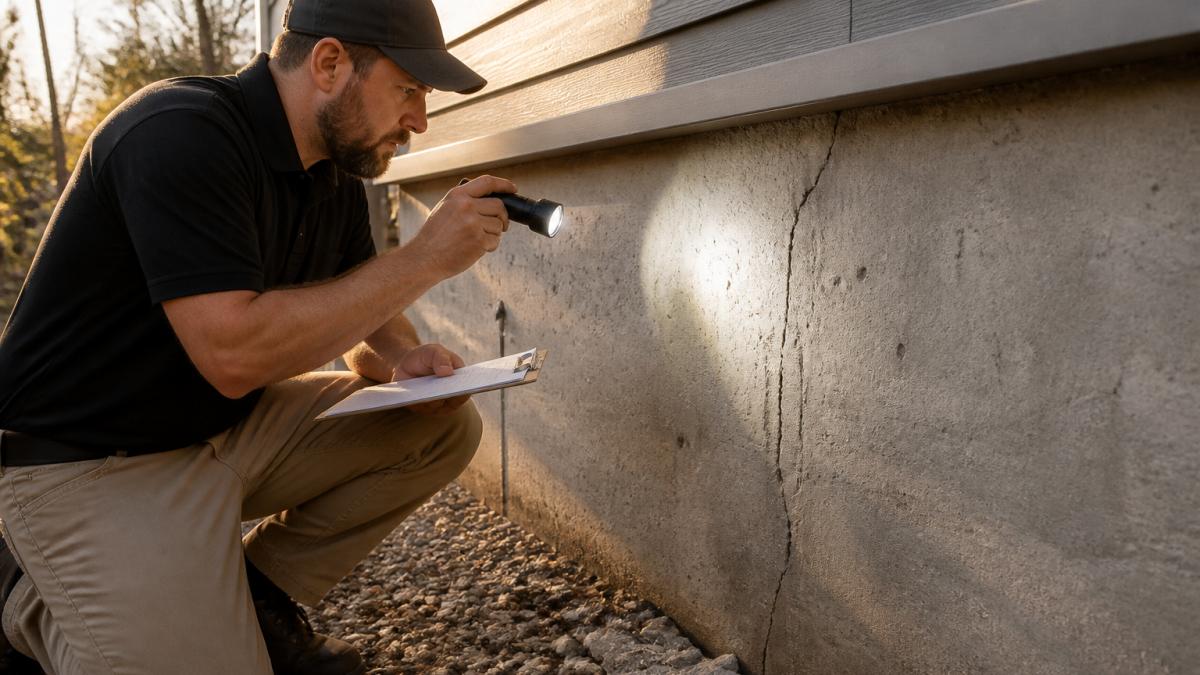
Walk your property with a flashlight and a notepad. These are the signals worth writing down:
- Cracks wider than a quarter inch, or cracks that have grown since you last checked
- Stair-step cracking through mortar joints in block or brick foundations
- Doors and windows that stick in rooms where they used to close cleanly
- Floors that slope or feel springy underfoot
- Visible bowing or leaning in a foundation wall
- Water staining or efflorescence, the white powder left by moisture moving through concrete
- Gaps where the foundation meets the frame above it
A common mistake is caulking a crack and calling it fixed. Caulk hides the symptom and tells you nothing about whether movement is active. Monitor instead: mark the crack ends with a pencil and a date, then check again in a few months.
When the Damage Crosses Into Replacement Territory
Replacement enters the conversation when the foundation can no longer carry the load above it. The clearest indicators are widespread settlement across multiple walls, a foundation that has moved so far that framing is visibly distorted, or a wall that is bowing inward with horizontal cracking. Crumbling, flaking concrete across large areas points the same direction.
Age and construction type matter here. A foundation that has performed well for decades and shows one localized issue is usually a repair candidate. A foundation with chronic, progressing movement in several places is a different problem, and patching it piece by piece tends to cost more over time than one decisive fix.
What a Professional Foundation Inspection Actually Reveals
A foundation inspection answers one question: is the movement active, and is the structure still sound? An inspector measures crack widths and wall plumb, checks for moisture intrusion, and evaluates soil and drainage conditions around the foundation. The report should tell you what is moving, how fast, and why.
What most homeowners miss is that the "why" drives the recommendation more than the damage itself. Poor drainage and soil movement cause a large share of foundation problems, and a repair that ignores the cause will fail again. Ask specifically whether the inspection identified a water source, a soil condition, or a construction defect behind the movement.
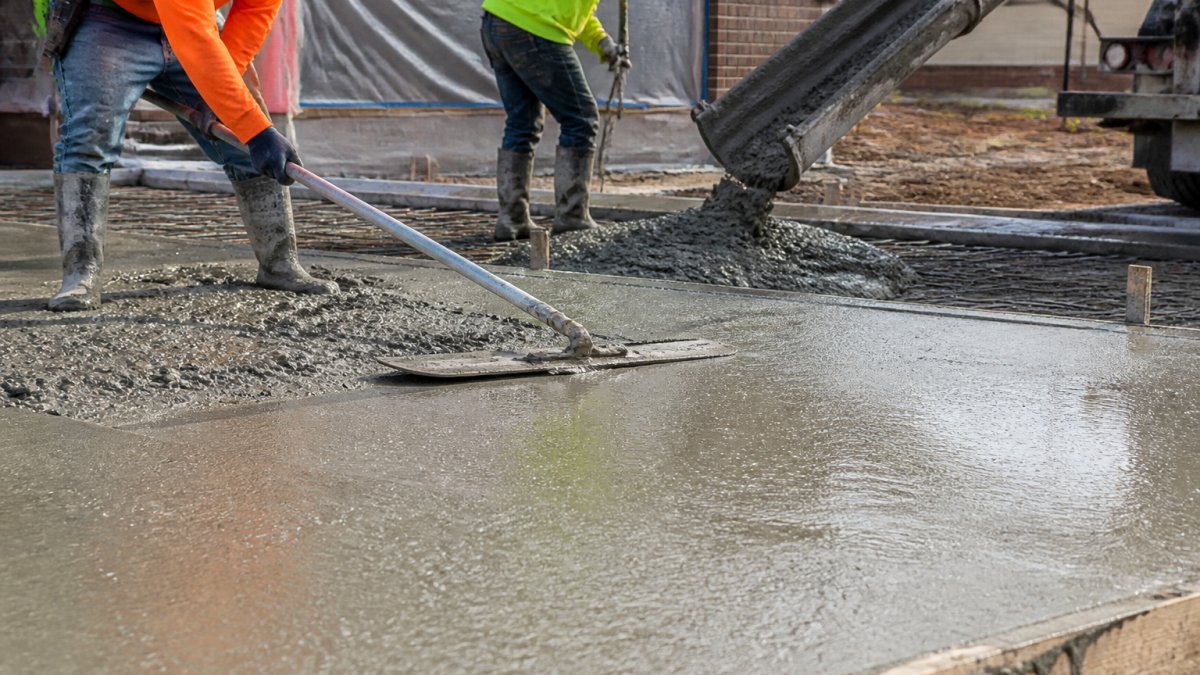
If the assessment points toward structural work, it helps to see what the actual service involves. A proper foundation job typically includes site preparation, grading, and reinforcement stages, which gives you a reference point for evaluating any contractor's proposed scope.
Foundation Repair Cost: What Drives the Number Up or Down
Foundation repair cost depends on the method, the access, and the cause, not on a flat rate per crack. Pricing rules in this industry are set job by job, and any contractor quoting a firm number over the phone is guessing. What you can control is understanding the drivers so you can compare bids on equal terms.
The main cost drivers:
- Repair method. Crack injection, piering, wall anchors, and carbon fiber reinforcement carry very different material and labor profiles.
- Access and excavation. Tight lots, finished landscaping, and interior obstructions add labor hours.
- Cause remediation. Drainage correction, grading, and downspout routing may need to happen alongside the structural fix.
- Permits and engineering. Some repairs require stamped drawings or municipal review, which adds cost and time.
- Scale. One wall versus three changes everything.
When bids come in, ask each contractor to separate structural work from drainage work and to state what is excluded. Understanding fixed price concrete quotes helps you evaluate those bids on equal terms. That single request exposes the bids that look cheap because they leave half the job out.
Foundation Replacement Cost and What the Bigger Job Involves
Foundation replacement cost sits in a different category entirely, because replacement means lifting or supporting the structure, removing the old foundation, and building a new one. The scope typically includes shoring the house, excavation, new footings and walls, waterproofing, and reconnecting utilities and framing.
What drives the number up: the size and shape of the footprint, the type of replacement system, how much of the structure must be temporarily supported, and whether the home sits on a slope or a tight urban lot. Disruption is the other cost. Expect the property to be unusable for an extended period, and plan for the trades that follow the foundation work.
The risk that catches owners off guard is price escalation after work begins. Once a foundation is opened up, hidden conditions surface, and unscrupulous contractors treat that as an opening to renegotiate. Learning how to avoid concrete contractor price escalation protects you on a project this size.
Side-by-Side: Comparing Repair and Replacement on Cost, Longevity, and Disruption
Repair usually wins on upfront cost and speed; replacement wins on certainty when the structure is genuinely failing. Neither wins universally. The honest comparison comes down to what you are buying: a fix for a specific defect, or a new foundation under the whole structure.
| Factor | Repair | Replacement |
|---|---|---|
| Upfront cost | Lower, varies by method | Substantially higher |
| Timeline | Days to a few weeks | Weeks to months |
| Disruption | Often partial, home stays usable | Property largely unusable during work |
| Longevity | Good if the cause is corrected | New foundation service life |
| Best for | Localized, stable damage | Widespread or progressing failure |
| Main risk | Recurrence if cause is ignored | Escalation and hidden conditions |
The pattern in that table is the throughline of this whole decision. Repair is generally the right call when the damage is contained and the cause is fixable. Replacement is generally the right call when the foundation has stopped doing its job. The expensive mistakes happen when owners pick based on the bid total instead of the diagnosis.
How Long Each Option Lasts and What Shortcuts Cost You Later
A correctly executed repair holds up for the long term, provided the underlying cause was addressed. A repair done as a cosmetic patch, with no drainage correction and no monitoring, tends to reopen within a few seasons. That is not a materials problem. It is a diagnosis problem.
Replacement resets the clock on the foundation itself, but only if the new work is built properly. Site preparation, grading, and rebar reinforcement are stages that affect whether a new foundation performs. Skipping them can leave you with a foundation that behaves like the old one.
Watch out: the cheapest bid is frequently the one that omits cause remediation or reinforcement. The savings show up on the invoice and disappear in the first wet season.
Get a Foundation Assessment Before You Commit
Before you commit to either path, get the foundation assessed and get the scope in writing. That sequence protects you more than any single line in a contract. It also tells you whether the work needs municipal review, which is worth confirming early rather than mid-project. Review the Kansas City concrete permit requirements before scheduling foundation work.
At BK Concrete LLC, we handle site preparation, grading, rebar reinforcement, and precision finishing. Our interactive online cost estimator gives you a quick ballpark on material and labor before anyone visits the site.
Get started with BK Concrete LLC and request a job estimate.
Frequently Asked Questions
How do I know if my concrete foundation needs repair or replacement?
The deciding factor is usually the structural integrity of the foundation itself. Cracks you can repair with epoxy or polyurethane injection, minor settling corrected with piers, and surface spalling often fall into the repair category. Replacement becomes necessary when the foundation has failed structurally: widespread crumbling, bowing walls, or settlement that piering cannot safely correct. A professional foundation inspection is the only reliable way to tell the difference, because many serious problems look cosmetic from the surface.
Is it cheaper to repair or replace a concrete foundation?
Repair is almost always cheaper upfront, but the gap depends on the damage. Focused fixes like crack injection or slab leveling cost far less than a full replacement, which involves demolition, new footings, and rebuilding. The real comparison is cost per year of service. A repair that buys five years before the same problem returns can cost more over time than a replacement that lasts decades. Get a written estimate for both options before deciding, and ask how long each is expected to last.
Can a cracked concrete foundation be repaired?
Most cracks can be repaired. Hairline shrinkage cracks are often cosmetic and sealed with caulk or epoxy. Larger structural cracks can be injected with epoxy or polyurethane foam, and settling foundations can be stabilized with steel or helical piers. The key is diagnosing why the crack formed. If the cause is soil movement or poor drainage, repairing the crack without addressing the source means it will likely reopen. Ask your contractor to explain the cause, not just the fix.
What should I ask a contractor before choosing foundation repair or replacement?
Ask four things: what caused the damage, whether repair or replacement is recommended and why, how long the work is warrantied, and whether permits and inspections are included. A contractor who recommends replacement without a clear structural reason deserves a second opinion. Also ask for the scope in writing, including site preparation and grading, since shortcuts there are a common reason foundations fail again. Compare warranties directly, because a long warranty on paper means little if the company won't stand behind it.
The hardest part of this decision is not the work itself. It is trusting the diagnosis enough to spend money on the right fix. Start with an assessment, insist on a written scope that separates structural work from drainage work, and compare bids on what they include rather than what they cost. That approach protects you whether the answer turns out to be repair or replacement.