 blog
How to Choose the Most Durable Concrete Finish
Last Updated: October 25, 2026
Quick Summary
A durable concrete finish is the difference between a surface that lasts decades and one that fails within years. For most driveways, a sealed broom finish delivers solid durability at reasonable cost, offering 20-30 years of service life with resealing every 2-3 years.
- Sealed broom finish has the lowest installed and long-term cost if you maintain resealing schedules.
- Exposed aggregate resists freeze-thaw cycles better than broom finish and typically exceeds 25-30 years durability.
- Penetrating sealers last 3-5 years and are ideal for freeze-thaw climates; surface sealers last 5-10 years but can peel if moisture transmits through the slab.
- Site preparation, reinforcement, concrete mix design, and proper curing are as important to durability as the finish itself.
- Smooth troweled finishes are not recommended for driveways because water pools and freeze-thaw damage accelerates.
Table of Contents
- Why Concrete Finish Matters for Long-Term Durability
- Best Concrete Finish for Driveways: Weighing Your Options
- Broom Finish Concrete Durability and Slip Resistance
- Exposed Aggregate Concrete Durability and Weather Resistance
- Polished Concrete and Troweled Finishes for Indoor Spaces
- Concrete Sealer for Durability: Protection Against Staining and Damage
- Durability Factors Beyond the Finish: Site Preparation and Reinforcement
- Getting Your Durable Concrete Finish Installed Right
- Frequently Asked Questions
Why Concrete Finish Matters for Long-Term Durability
A durable concrete finish is the difference between a surface that lasts decades and one that fails within years. The finish you choose determines how well your concrete resists weather, foot traffic, chemicals, and freeze-thaw cycles. The wrong finish choice can lead to cracking, staining, and costly repairs that could have been prevented.
The concrete itself is only part of the equation. Surface preparation, reinforcement, and the finish type work together to create durability. Without the right finish, even premium concrete deteriorates quickly. The good news: understanding your options makes it simple to choose the best concrete finish for durability in your specific situation.
This guide covers the finishes that actually perform, the ones to avoid, and the factors that matter most beyond the surface itself.
Best Concrete Finish for Driveways: Weighing Your Options
Driveways face constant stress: vehicle weight, deicing salts, moisture, and temperature swings. The best concrete finish for driveways is not the same for every climate or budget. Most ranking articles list options without ranking them.
1. Sealed broom finish, best overall durability for the money. A broom finish creates parallel grooves that provide traction, and a penetrating sealer blocks moisture and salt intrusion.
2. Exposed aggregate, best for wet climates and freeze-thaw. The exposed stones are harder than cement paste and shed water effectively, reducing moisture damage. In freeze-thaw regions, the texture helps water drain away from the surface rather than pooling.
3. Epoxy or polyaspartic coating, best for chemical and oil resistance. These coatings create a hard, glossy barrier that resists oil, salt, and UV damage.
4. Troweled or smooth finish, not recommended for driveways. A smooth troweled surface is slippery when wet and offers no drainage benefit.
Lifecycle cost comparison. Broom plus sealer has the lowest installed cost and the lowest long-term cost if you keep up with resealing.
For most driveways, a sealed broom finish delivers solid durability at reasonable cost. If maximum freeze-thaw protection or heavy chemical exposure is needed, exposed aggregate or epoxy can be a worthwhile investment. Get a concrete driveway replacement quote to see which option fits your budget and needs.
These finishes rank by durability for driveways, with typical service life and key trade-offs.
| Finish | Best For | Service Life | Main Trade-Off |
|---|---|---|---|
| Sealed broom finish | Most driveways, freeze-thaw climates | 20-30 years | Grooves trap dirt and salt; needs pressure washing twice yearly |
| Exposed aggregate | Wet climates, freeze-thaw regions | 25-30 years | Higher upfront cost; requires skilled installation |
| Epoxy or polyaspartic coating | Chemical and oil resistance | 5-10 years before recoating | Highest upfront cost; can peel if moisture vapor transmits |
| Troweled or smooth finish | Not recommended for driveways | Shortest lifespan | Slippery when wet; water pools; accelerates freeze-thaw damage |
Broom Finish Concrete Durability and Slip Resistance
Broom finish concrete is created by dragging a broom across the surface before it fully cures. This creates parallel grooves that improve traction and hide minor imperfections. It's the most common finish for driveways and outdoor walkways because it's affordable and practical.
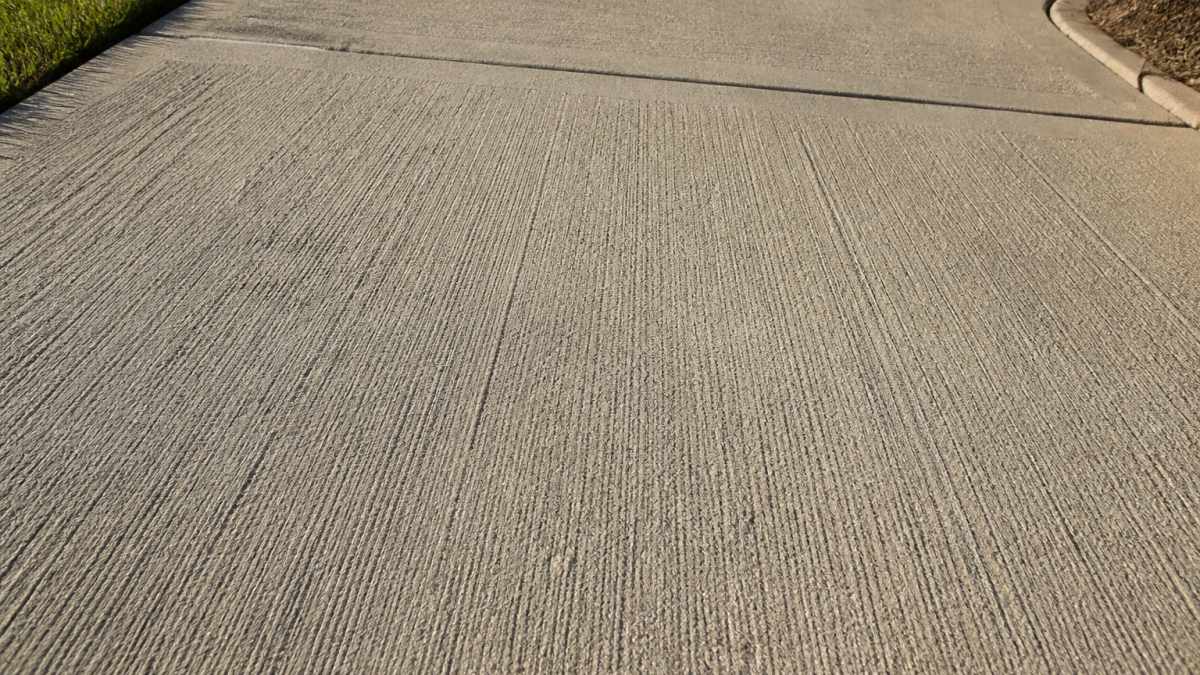
The texture provides excellent slip resistance, which is why it's required in many commercial settings. Wet or icy conditions are safer on broom finish than on smooth concrete. This makes it ideal for high-traffic areas where safety matters.
Durability depends on concrete quality and climate. In dry regions, broom finishes last 20-30 years with minimal maintenance. In freeze-thaw climates, the textured surface can trap water, leading to scaling and spalling over time. Regular sealing helps prevent this damage.
The main drawback is maintenance. The grooves collect dirt, leaves, and salt. Pressure washing twice yearly keeps it clean. Without regular cleaning, the surface looks dingy and deteriorates faster. If you're willing to maintain it, broom finish offers excellent durability for the cost.
Exposed Aggregate Concrete Durability and Weather Resistance
Exposed aggregate finishes reveal the stones and gravel embedded in the concrete. The surface is textured, durable, and attractive. This finish is popular for patios, pool decks, and decorative applications where appearance matters as much as function.
Exposed aggregate provides strong weather resistance. The aggregate stones are harder than the cement paste, so they resist abrasion and wear. The textured surface sheds water effectively, reducing moisture damage.
The finish requires proper installation. The top layer of cement must be removed to expose the stones, which requires skill and timing. Poorly done, the aggregate can pull out, leaving pits and weak spots. Professional installation is important here.
Durability typically exceeds 25-30 years in most climates. The main maintenance is occasional sealing to prevent staining and protect the cement matrix. Unlike broom finishes, exposed aggregate doesn't trap dirt as easily, making it easier to keep clean.
The cost is higher than broom finish but lower than polished concrete. If you want durability plus visual appeal, exposed aggregate is a solid choice. It's especially effective in wet climates where drainage matters.
Polished Concrete and Troweled Finishes for Indoor Spaces
Polished concrete is a smooth, glossy finish created by grinding and polishing the surface. It's popular for retail spaces, warehouses, and high-end homes. The smooth surface is easy to clean and looks professional.
Durability depends on use. In light-traffic indoor spaces, polished concrete lasts 10-15 years before needing refinishing. In commercial settings with heavy foot traffic, durability drops to 5-10 years. The smooth surface is slippery when wet, which limits outdoor use.
Troweled finishes are smooth but not polished. A concrete trowel creates a flat, dense surface that's easier to maintain than polished concrete. Troweled finishes work well indoors and are less slippery than polished surfaces. They're also more forgiving of minor surface imperfections.
Both finishes require proper curing and reinforcement to prevent cracking. The smoother the surface, the more visible any cracks become. Professional installation with quality materials is essential. Learn about finish quality issues to understand what affects the durability of smooth finishes.
Concrete Sealer for Durability: Protection Against Staining and Damage
A concrete sealer is your best defense against moisture, stains, and chemical damage. Sealers work by filling pores in the concrete and creating a protective barrier on the surface.
There are two main types: penetrating sealers and surface sealers.
Penetrating sealers absorb into the concrete and protect from within. They don't change the appearance much and allow the concrete to breathe.
Surface sealers create a visible coating on top. They provide stronger protection and a glossy or matte appearance. Acrylic sealers are affordable but need reapplication every 1-2 years.
Climate-specific sealer choice. In freeze-thaw climates, choose a penetrating silane or siloxane sealer that limits water absorption while allowing vapor to escape.
Application matters. Proper surface preparation, correct application temperature, and adequate curing time all affect performance. A poorly applied sealer won't protect effectively and may peel or bubble.
Maintenance extends sealer life. Regular cleaning removes dirt and salt before they can damage the concrete. Resealing on schedule prevents gaps in protection.
A sealer is not a substitute for good concrete mix design, proper curing, and drainage. It is the last line of defense, not the first. Learn about finish quality issues to understand how sealer choice interacts with the rest of the slab.
Durability Factors Beyond the Finish: Site Preparation and Reinforcement
The finish is only one part of durability. What happens before the concrete is poured matters just as much. Poor site preparation and inadequate reinforcement lead to failure no matter how good the finish is.
Site preparation sets the foundation. Proper grading ensures water drains away from the concrete. Compacted base materials prevent settling and cracking. Subgrade issues are the leading cause of concrete failure.
Reinforcement controls cracking. Rebar or wire mesh distributes stress and keeps cracks small and tight. Properly reinforced concrete resists freeze-thaw damage better than unreinforced concrete.
Concrete mix design affects durability. The water-cement ratio, aggregate type, and additives all matter. A lean mix (less water) is more durable than a rich mix. Air entrainment helps concrete resist freeze-thaw cycles.
Curing determines strength. Concrete needs proper moisture and temperature during the first 7 days to reach full strength. Rapid drying or freezing during cure weakens the concrete. Poor curing creates a weak surface layer that fails prematurely.
Our team manages site preparation, grading, and reinforcement to ensure your concrete has a strong foundation. The finish is the final step, but it starts with a solid base.
Getting Your Durable Concrete Finish Installed Right
Installation quality determines whether your concrete lives up to its potential. Even the best finish fails if the installer doesn't know what they're doing. Common mistakes include improper timing, incorrect sealer application, and skipped surface preparation steps.
Timing is critical. Broom finishes must be applied at the right concrete set stage, too early and the bristles sink too deep, too late and they won't create proper texture. Polished finishes require the concrete to cure fully before grinding begins. Sealer application timing affects adhesion and performance.
Surface preparation is non-negotiable. Concrete must be clean, dry, and free of contaminants before sealing or coating. Oil stains, dust, and old sealer residue prevent new coatings from bonding properly. Pressure washing and acid etching are common prep steps.
Professional installation costs more upfront but saves money long-term. A properly installed finish lasts years longer than a poorly installed one. The difference often justifies the higher price.
Professional concrete paving services handle every step of the process. From site preparation through final finishing, proper installation protects your investment and ensures durability. We use proven techniques and quality materials to deliver finishes that last.
Frequently Asked Questions
What is the most durable concrete finish for a driveway?
The most durable concrete finish for driveways depends on your climate and traffic. Broom finishes provide excellent slip resistance and durability for freeze-thaw cycles. Exposed aggregate offers superior wear resistance for high-traffic areas. Both benefit significantly from a quality concrete sealer applied after curing, which adds chemical resistance and stain resistance, extending service life by years. Proper site preparation and rebar reinforcement underneath are equally important to prevent cracking.
How long does a concrete sealer for durability typically last?
Most concrete sealers last 2-5 years depending on traffic, weather exposure, and UV stability of the product. High-traffic driveways need resealing more frequently. Epoxy and polyaspartic coatings offer longer protection (3-7 years) than standard acrylic sealers. Resealing maintains chemical resistance and prevents moisture penetration, which protects against freeze-thaw damage and staining.
Is broom-finished concrete more durable than smooth concrete?
Broom-finished concrete is not inherently more durable than smooth (troweled) concrete in terms of abrasion resistance. However, broom finishes provide superior slip resistance and better performance in wet conditions, making them safer for driveways and patios. Smooth finishes are more prone to staining and require more maintenance. Both achieve similar service life when properly sealed, but broom finishes hide wear patterns better and are easier to maintain in outdoor applications.
Does exposed aggregate concrete last longer than other finishes?
Exposed aggregate concrete offers excellent wear resistance and durability, particularly for high-traffic commercial applications and outdoor surfaces. The aggregate surface resists abrasion and maintains appearance longer than smooth finishes. It also provides natural slip resistance. However, durability depends on the quality of the concrete mix, proper curing time, site preparation, and sealing. A well-maintained exposed aggregate surface with regular resealing can outlast other finishes by several years, especially in freeze-thaw climates.
Choosing the best concrete finish for durability means matching the finish to your climate, use, and maintenance commitment. Site preparation and reinforcement matter as much as the surface itself. BK Concrete LLC combines quality materials, proper installation, and site preparation expertise to deliver concrete that lasts. Calculate a job estimate to get started on your project with confidence.