 listicle
7 Benefits of Hiring Direct Concrete Specialists
Last Updated: November 8, 2026
Quick Summary
Hiring direct concrete specialists gives you one crew accountable for site prep, reinforcement, the pour, and the cure, so responsibility never bounces between a general contractor and a subcontractor. You also avoid a general contractor's markup on the concrete scope, though you take on more vetting of licensing, insurance, references, and written scope.
- A subcontracted chain adds scheduling windows, and each window is a chance for a delay.
- Compare bids line by line, because a quote that omits reinforcement or a cure plan is not the same job.
- Ask whether the crew on site will be the contractor's employees or subcontractors.
- A large cash deposit demanded before any work begins is a reason to walk away.
- Curing is inexpensive to do and expensive to skip, so confirm the method and duration in writing.
Table of Contents
- Why Going Direct Beats a Subcontracted Concrete Crew
- 1. Specialized Expertise You Can Verify
- 2. Quality Workmanship and Structural Integrity
- 3. Faster Timelines and Fewer Construction Delays
- 4. Cost Savings and Fewer Costly Repairs
- 5. Site Preparation, Materials, and Curing Done Right
- 6. Questions to Ask a Concrete Contractor Before You Sign
- 7. Concrete Contractor Red Flags That Should End the Conversation
- Frequently Asked Questions
Why Going Direct Beats a Subcontracted Concrete Crew
The benefits of hiring direct concrete specialists start with accountability. When one crew pours and finishes the work, one company owns the outcome from the first grade pass to the final cure.
A general contractor who subcontracts concrete adds a layer between you and the crew placing the slab. When a pour cures with hairline cracks or a grade drains toward the garage, that layer becomes a buffer: the general contractor points at the sub, and the sub points back.
1. Specialized Expertise You Can Verify
Verifiable expertise means the contractor can show you licensing, insurance, and a body of completed work that matches your project type. Concrete specialists do one thing, and that focus shows up in how they read a site.
A low bid from a jack-of-all-trades is rarely a bargain. Concrete behaves differently across soil types, freeze-thaw cycles, and slab thicknesses, and a crew that pours driveways one week and foundations the next knows which mix and reinforcement schedule fits each job.
How to Choose a Concrete Contractor with Real Credentials
Start with the paper trail, then move to the site.
- Current state contractor license and registration number
- General liability insurance certificate with your project address listed
- Workers' compensation coverage for the crew on site
For a deeper walkthrough of vetting, see how to choose commercial flatwork contractors.
2. Quality Workmanship and Structural Integrity
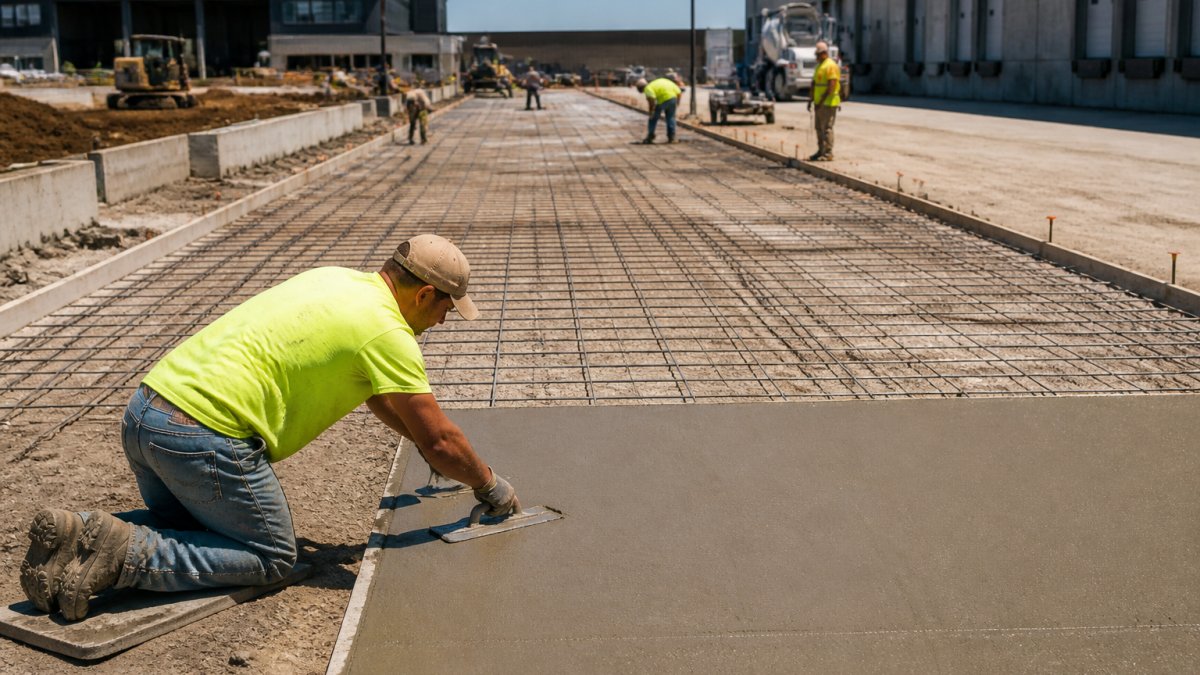
Quality workmanship in concrete comes down to control: the mix, the subgrade, the reinforcement, and the cure.
Structural integrity is rarely lost at the surface. It is lost underneath, in a soft subgrade or a reinforcement grid laid too close to the ground.
According to the American Concrete Institute's guidance on concrete construction, proper consolidation and curing are central to durable slabs.
3. Faster Timelines and Fewer Construction Delays
Faster timelines come from fewer handoffs. Each company in a subcontracted chain adds its own scheduling window, and every window is a chance for a delay.
A driveway replacement through a general contractor, a grading sub, and a separate pour crew means three calendars have to align. Rain on the grading day pushes the pour, which pushes the finish, which pushes your ability to park.
Ask any contractor how many active jobs they run at once and how they sequence weather delays. A specific answer shows they have thought about your timeline; a promised date with no caveats has not.
4. Cost Savings and Fewer Costly Repairs
Cost savings from going direct show up in two places: fewer markup layers and less rework. Hiring the concrete crew directly can eliminate a general contractor's markup on the concrete portion. The bigger savings often come later, because a slab poured on a poor subgrade or cured too fast can crack, settle, or spall within a few seasons, and repairing it means paying twice.
The useful comparison is total cost of ownership across the three ways a concrete project gets delivered: do-it-yourself, a general contractor who subcontracts the pour, and a direct concrete specialist. The cheapest bid is rarely the cheapest job.
The Three Delivery Models, Compared on Cost Mechanics
Do-it-yourself. You pay for materials, tool rental, and your own labor, plus the cost of mistakes.
General contractor with a concrete subcontractor. You pay the sub's price plus the general contractor's markup on that portion, and you inherit a coordination layer.
Direct concrete specialist. You pay one company for labor, materials, equipment, and accountability, with no general contractor markup on the concrete scope.
Where the Money Actually Goes
A concrete bid is a stack of line items, and each one is a place where a low number can hide a shorter-lived slab. When you compare bids, separate the price into these buckets so you can see what is included and what is missing:
- Base preparation: excavation, grading, compaction, and any base material. A bid that skips or thins the base is pricing a slab that will move.
- Reinforcement: rebar or mesh, including size, spacing, and chairs to hold it at the right depth.
- Concrete volume and mix: slab thickness times area, plus the mix design and strength. A thinner slab carries less load.
A quote that omits reinforcement, proper base depth, or a cure plan is not a lower price for the same job. It is a lower price for a shorter-lived slab. Compare bids line by line, not just at the bottom.
The Repair Risk You Are Really Buying Down
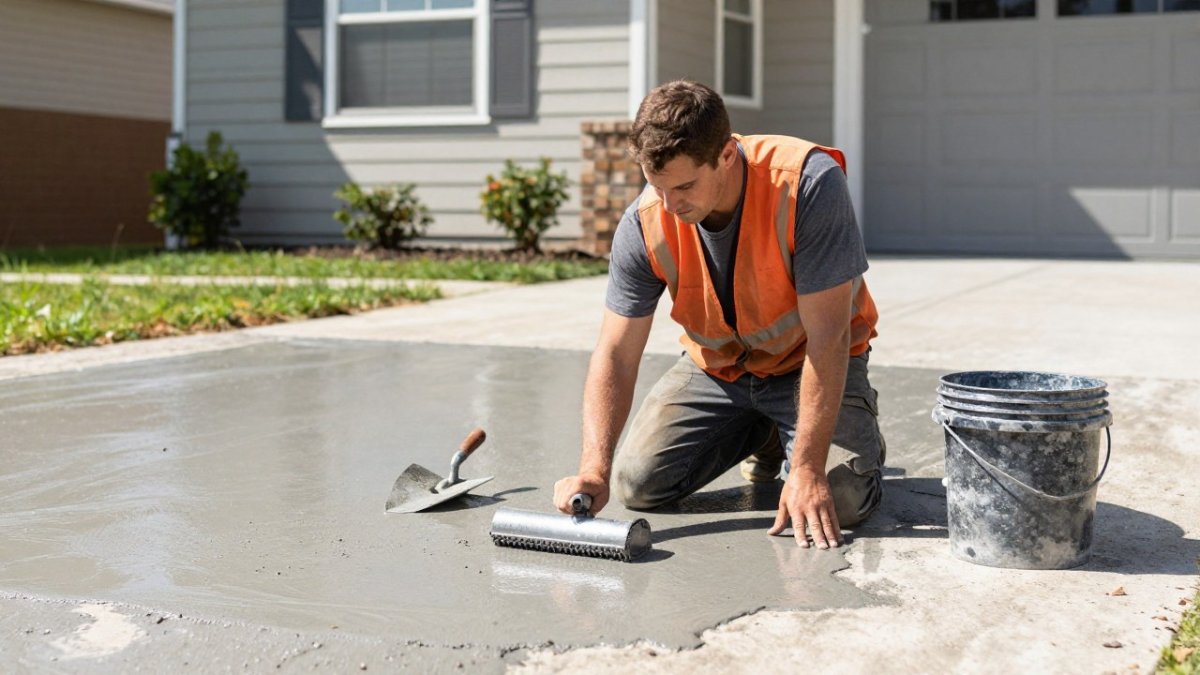
Concrete failures are rarely cheap to fix. A cracked or settled driveway, patio, or slab typically has to be broken out and replaced, often at prices higher than the original job because of mobilization and disposal costs.
Watch out: a bid far below the others with no explanation of what is excluded is not a bargain. To understand how fixed pricing protects you from mid-project surprises, review what to expect from fixed-price concrete quotes and how to avoid contractor price escalation.
Concrete Contractor Estimate Checklist
Use this checklist to compare bids on equal footing. If a bid is missing an item, ask why in writing.
- Square footage and slab thickness stated
- Base preparation depth and compaction method
- Reinforcement type, size, and spacing
Here is how the three delivery models compare on cost mechanics.
| Delivery model | What you pay for | Key trade-off |
|---|---|---|
| Do-it-yourself | Materials, tool rental, own labor, cost of mistakes | Can make sense for small, non-structural flatwork |
| General contractor with concrete subcontractor | Sub's price plus general contractor markup | Responsibility can bounce between the two |
| Direct concrete specialist | One company for labor, materials, equipment, accountability | More vetting on your side |
5. Site Preparation, Materials, and Curing Done Right
Site preparation, material selection, and curing decide how a slab performs, and a direct specialist owns all three.
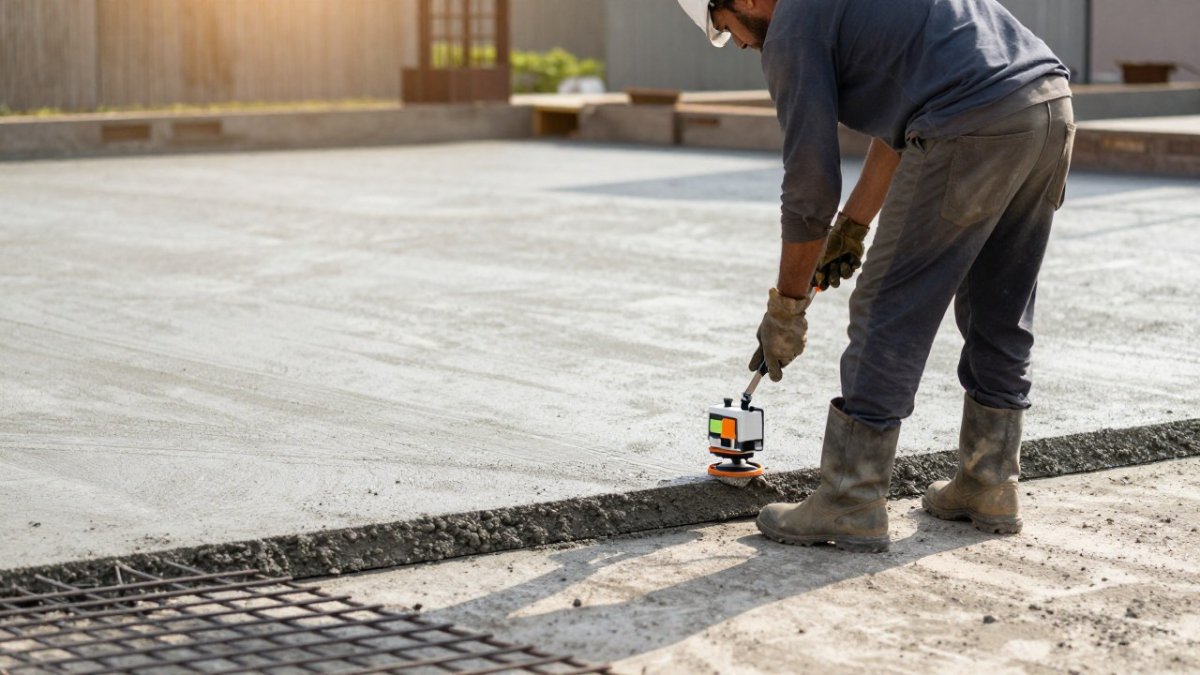
Site Preparation: The Base Carries the Slab
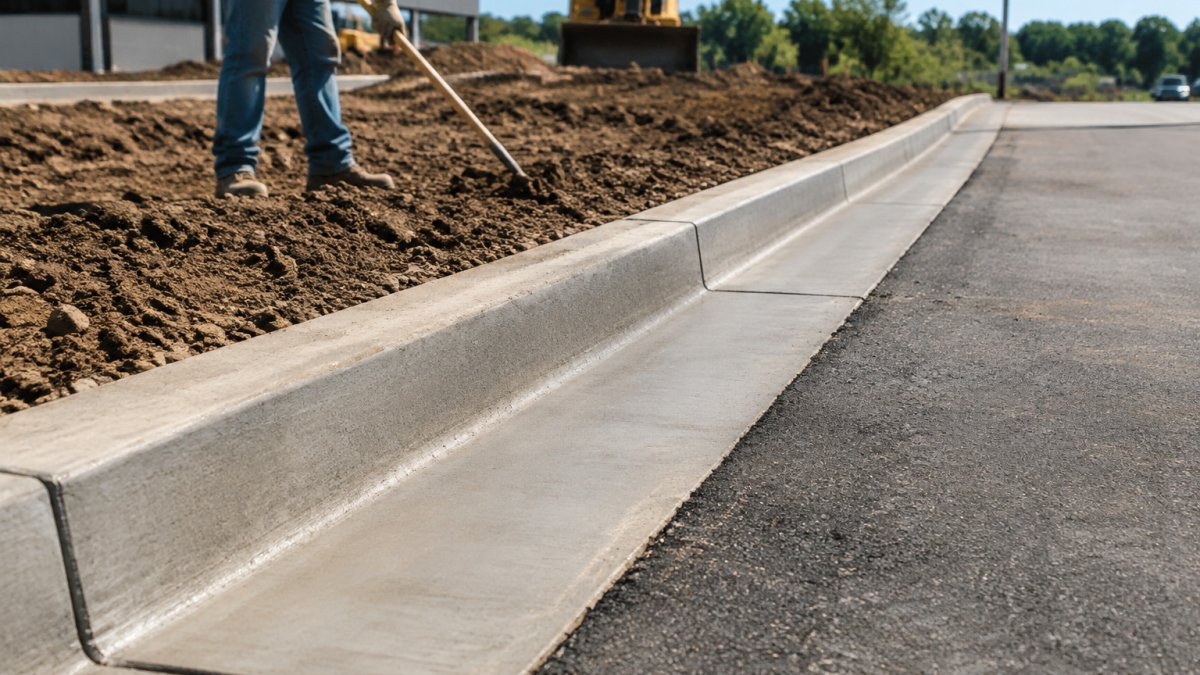
Concrete is strong in compression but weak in tension, and it does not bridge soft spots. If the subgrade settles, the slab moves, and movement shows up as cracking, settlement, or trip hazards at joints. Proper preparation means removing unsuitable material such as roots and organic soil, grading to the planned slope, and compacting the base in lifts to a specified density.
Materials: The Mix Is Matched to the Job
Concrete is not one product. A mix is designed around strength, workability, and durability, adjusted for the application and the climate.
- Strength: specified as a compressive strength, and selected for the load the slab will carry. A driveway, a foundation, and a decorative patio do not need the same mix.
- Workability: how easily the concrete places and finishes, often described by slump. A mix that is too wet is easier to place and weaker in place.
- Air content: entrained air gives concrete room to expand when water in the pores freezes. In climates with freeze-thaw cycles, air content is a durability requirement, not a preference.
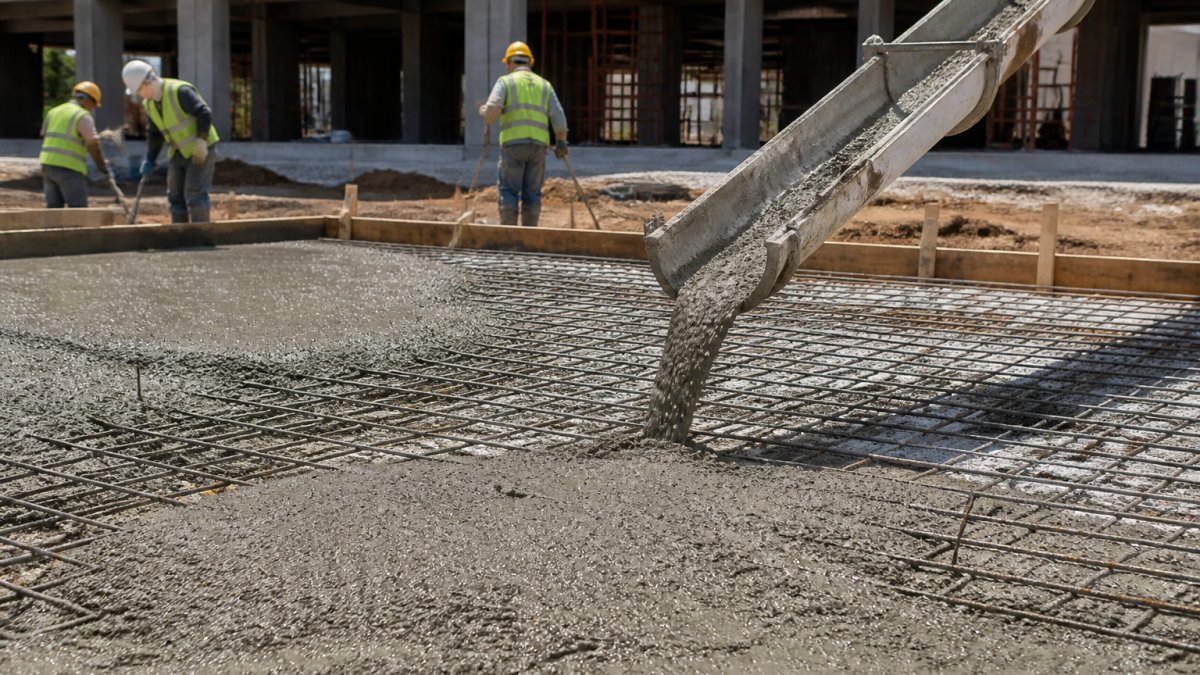
Reinforcement is part of the material plan as well. Rebar or mesh has to be the right size and spacing for the slab, and it has to be held at the correct depth within the pour, typically using chairs or supports, so it does the job it was specified to do.
Placement, Joints, and Finishing: Controlling Where Cracks Appear
Concrete shrinks as it cures, and restrained shrinkage produces cracks. The contractor cannot stop all cracking but can control where it happens: control joints cut or formed at planned intervals create weak planes that crack first, keeping visible cracking in straight lines rather than random spidering. Joint layout, cut timing, consolidation, and proper screeding and floating are one control system.
Curing: The Stage Most Often Cut Short
Concrete does not dry to strength; it cures through a chemical reaction that needs moisture and time. Curing means keeping the slab moist and protected for a defined period so it can reach its intended strength and durability.
A common mistake is rushing the cure to reopen a driveway or parking area. According to the American Concrete Institute's guidance on concrete construction, proper consolidation and curing are central to durable slabs.
How to Verify Quality Control Before the Pour
You do not need to be a concrete engineer to ask the right questions. Ask the contractor to put these in the written scope, and treat vague answers as a signal:
- The base depth and compaction method, and how compaction will be verified
- The mix design, including strength and air content where freeze-thaw is a factor
- The reinforcement size, spacing, and how it will be supported at the correct depth
6. Questions to Ask a Concrete Contractor Before You Sign
The right questions separate a specialist from a salesperson. Ask them in person and note how specific the answers are.
- Who will actually be on site, your employees or subcontractors?
- What mix design will you use for this slab, and why?
- How do you prepare and compact the base?
- What is your joint and crack-control plan?
- How long will you cure the slab, and how will you protect it?
- Who pulls the permits, and are they included in the price?
- What does your warranty cover, and for how long?
- Can you provide references from projects like mine?
Before signing, confirm the permit picture. Local requirements shape the scope and the inspection schedule, so review the permit requirements guide and confirm the contractor is handling them in writing.
7. Concrete Contractor Red Flags That Should End the Conversation
Treat any one of these as a reason to walk.
- A large cash deposit demanded before any work begins
- No written contract, or a contract with no scope details
- No license number, insurance certificate, or physical business address
If a contractor clears the red-flag check and answers the questions above, you are ready to request a written quote. When you are, get a concrete driveway replacement quote that spells out scope, schedule, and warranty.
Hiring direct concrete specialists is a decision about who owns the outcome. If you want one crew accountable for site prep, reinforcement, the pour, and the cure, BK Concrete LLC handles every stage across commercial and residential projects.
Frequently Asked Questions
What are the benefits of hiring a concrete specialist directly?
Going direct to concrete specialists keeps one crew accountable for site preparation, grading, reinforcement, pouring, finishing, and curing. Going direct can mean fewer intermediaries between you and the people doing the work.
How do you verify a concrete contractor's experience and qualifications?
Ask for their state contractor license number and confirm it is active, then request a certificate of insurance showing general liability and workers' compensation coverage. Ask for three recent projects of similar size and type, and visit at least one in person to check finish quality and drainage. Confirm they pull permits in their own name and ask what warranty they put in writing. A contractor who hesitates on any of these is telling you something.
What should a concrete contractor's estimate include?
A complete estimate lists excavation and grading, base material and compaction, rebar or mesh reinforcement, concrete mix design and thickness, forms, finishing method, control joints, curing method, cleanup, and permit fees. It should state the total in writing, note what is excluded, and give a start window. Use a concrete contractor estimate checklist to compare bids line by line, because a low number usually means something above was left out.
Is it better to hire a concrete specialist or a general contractor?
The right choice depends on the project. General contractors often subcontract flatwork and foundations, which can add a layer of communication between you and the crew. If your project is part of a larger build, a general contractor can coordinate it, but confirm who actually pours and who warranties the concrete.