 how-to
7 Heavy Duty Concrete Parking Pads That Hold Up
Last Updated: November 7, 2026
Quick Summary
Heavy duty concrete parking pads are reinforced slabs engineered for repeated vehicle loads, typically 6 to 8 inches thick with 4,000 to 4,500 PSI concrete and a rebar grid for box trucks and commercial fleets. Thickness, reinforcement, and a properly compacted, well-drained base separate them from standard slabs. Match the slab to the heaviest vehicle that will regularly park on it.
- Passenger cars and light SUVs typically need a 5- to 6-inch slab at 3,500 to 4,000 PSI.
- Pickups, vans, and full-size SUVs call for a 6-inch slab at 4,000 PSI with 4 rebar at 18 inches on center.
- Box trucks and light commercial fleets need 6 to 8 inches at 4,000 to 4,500 PSI with a thickened edge.
- Heavy commercial, RV, and equipment pads run 8 inches and up at 4,500 PSI and up.
- Most parking pad failures start underground, so a weak or poorly drained subgrade must be fixed first.
Table of Contents
- What Separates Heavy Duty Concrete Parking Pads From Standard Slabs
- Commercial Concrete Parking Pad Thickness by Vehicle Class
- Choosing the Right Concrete Mix for Heavy Vehicles
- Site Prep, Drainage, and Subgrade Work That Prevents Failure
- Concrete Parking Pad Cost: What Drives the Number
- Concrete Parking Bumpers and Wheel Stops: Protecting the Pad
- Installation, Curing, and Crack Prevention
- Calculate Your Heavy Duty Parking Pad Estimate
- Frequently Asked Questions
What Separates Heavy Duty Concrete Parking Pads From Standard Slabs
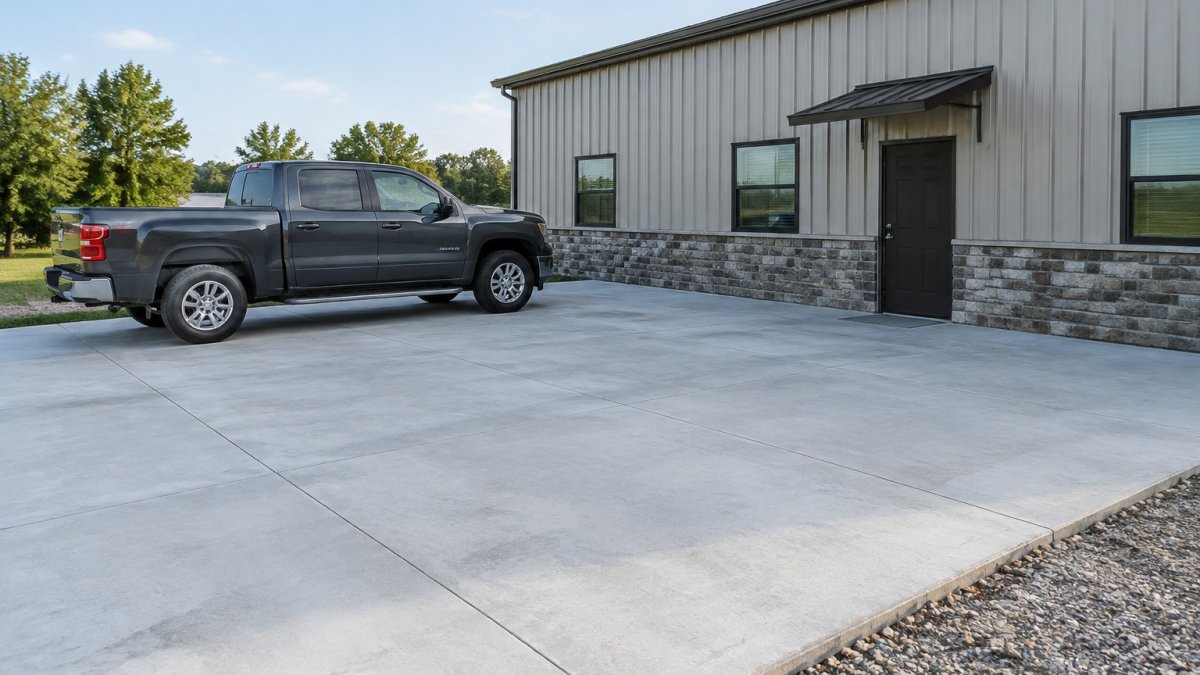
A heavy duty concrete parking pad is a reinforced slab engineered for repeated vehicle loads, not just occasional foot traffic. The difference comes down to three things: thickness, reinforcement, and what sits underneath. Standard slabs are typically poured thin for patios and walkways. Heavy duty concrete parking pads carry far more weight and need a base and steel to match. Skip any of those and you get cracking, settling, and expensive repairs within a few years.
Load Capacity and Vehicle Weight Basics
Vehicle weight drives every decision on a parking pad. A passenger car puts far less stress on a slab than a loaded pickup or a delivery truck. That load spreads through the tires into the concrete, then into the subgrade below. A pad built for a sedan will fail under a box truck. Match the slab to the heaviest vehicle that will regularly park on it, and add a margin for the occasional heavier one.
Commercial Concrete Parking Pad Thickness by Vehicle Class
Commercial concrete parking pad thickness should scale with the vehicles using the space, and the numbers matter more than the labels. A slab that holds up under cars is not the same slab that holds up under trucks. The table below shows general ranges for reinforced pads on a properly compacted base; treat them as starting points that a site-specific design can adjust for poor soils or heavy traffic.
| Vehicle class | Typical slab thickness | Typical compressive strength | Reinforcement |
|---|---|---|---|
| Passenger cars and light SUVs | 5 to 6 inches | 3,500 to 4,000 PSI | #3 or #4 rebar at 18 to 24 inches on center, or welded wire mesh |
| Pickups, vans, and full-size SUVs | 6 inches | 4,000 PSI | #4 rebar at 18 inches on center each way |
| Box trucks, delivery vehicles, and light commercial fleets | 6 to 8 inches | 4,000 to 4,500 PSI | #4 or #5 rebar at 12 to 18 inches on center, with a thickened edge |
| Heavy commercial, RV, and equipment pads | 8 inches and up | 4,500 PSI and up | Engineered rebar or mesh design, often #5 at 12 inches on center, with doweled joints |
A few rules of thumb sit behind those numbers. Thickness does more for load capacity than strength alone, because a thicker slab spreads wheel loads over a wider area of subgrade. Reinforcement keeps cracks tight and lets the slab bridge small soft spots rather than breaking. A thickened edge, often 12 inches deep at the perimeter, keeps the slab from curling and spalling where tires cross the boundary.
Watch out: pouring one thickness for a lot that mixes cars and trucks is a common shortcut that leads to cracked corners where the heaviest vehicles turn. Zone the pad by use, or build everything to the heaviest class that will regularly park there.
For residential driveways that see a mix of cars and an occasional pickup, a 5- to 6-inch reinforced slab is usually the practical floor. For a commercial lot with delivery traffic, the 6- to 8-inch range with a heavier rebar grid is the safer baseline. If the pad will carry a loaded dump truck or a piece of equipment, have the slab engineered for the axle loads rather than scaling up a residential detail.
Typical slab thickness by vehicle class
Choosing the Right Concrete Mix for Heavy Vehicles
A concrete pad for heavy vehicles needs a stronger, better-controlled mix than a standard sidewalk pour, and the mix has to be chosen together with thickness and reinforcement rather than in isolation. Compressive strength, measured in PSI at 28 days, tells you how much load the cured concrete can take. Most heavy duty parking pads land in the 4,000 to 4,500 PSI range, while a standard residential sidewalk is often specified at 3,000 to 3,500 PSI. Higher-PSI mixes cost more per cubic yard but resist cracking, abrasion, and surface wear under repeated traffic.
Three mix details matter as much as the headline PSI number:
- Water-to-cement ratio. Lower ratios produce stronger, denser concrete. A mix that is souped up with water for easier placement loses strength and invites shrinkage cracks.
- Air entrainment. In climates with freeze-thaw cycles, entrained air (typically 5 to 7 percent for outdoor flatwork) gives water a place to expand and protects the surface from scaling and spalling. A pad without air entrainment can look fine for years and then fail in a single hard winter.
- Aggregate size and gradation. A well-graded mix with aggregate sized to the slab thickness and reinforcement spacing flows around rebar without honeycombing. For a 6-inch pad with a rebar grid, a 3/4-inch to 1-inch nominal aggregate is common.
PSI Ratings, Reinforcement, and Fiber Options
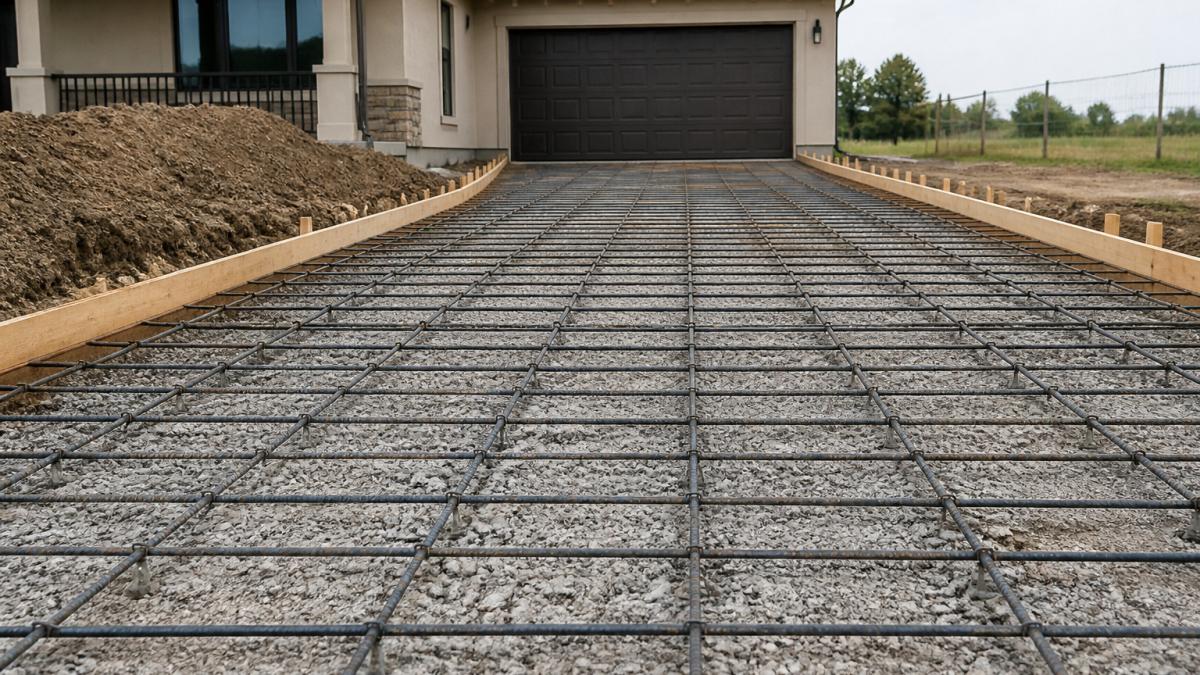
Higher PSI ratings give you a harder, more durable surface for heavy loads, but strength alone does not stop a slab from cracking. Reinforcement does the rest of the work. Steel rebar carries tensile stress and holds cracks together. Fiber additives help control the small shrinkage cracks that show up as concrete cures. For most heavy duty pads, combine a strong mix with a rebar grid. Fiber alone is not a substitute for steel in a load-bearing parking pad, though a fiber-and-rebar combination can improve crack control at the surface.
Watch out: ordering a high-PSI mix but placing it over a soft, poorly compacted subgrade wastes the money, because the slab will settle and crack regardless of mix strength. Mix design and base preparation have to be specified together. If you want the deeper case for steel, our team explains why rebar matters in driveways.
Site Prep, Drainage, and Subgrade Work That Prevents Failure
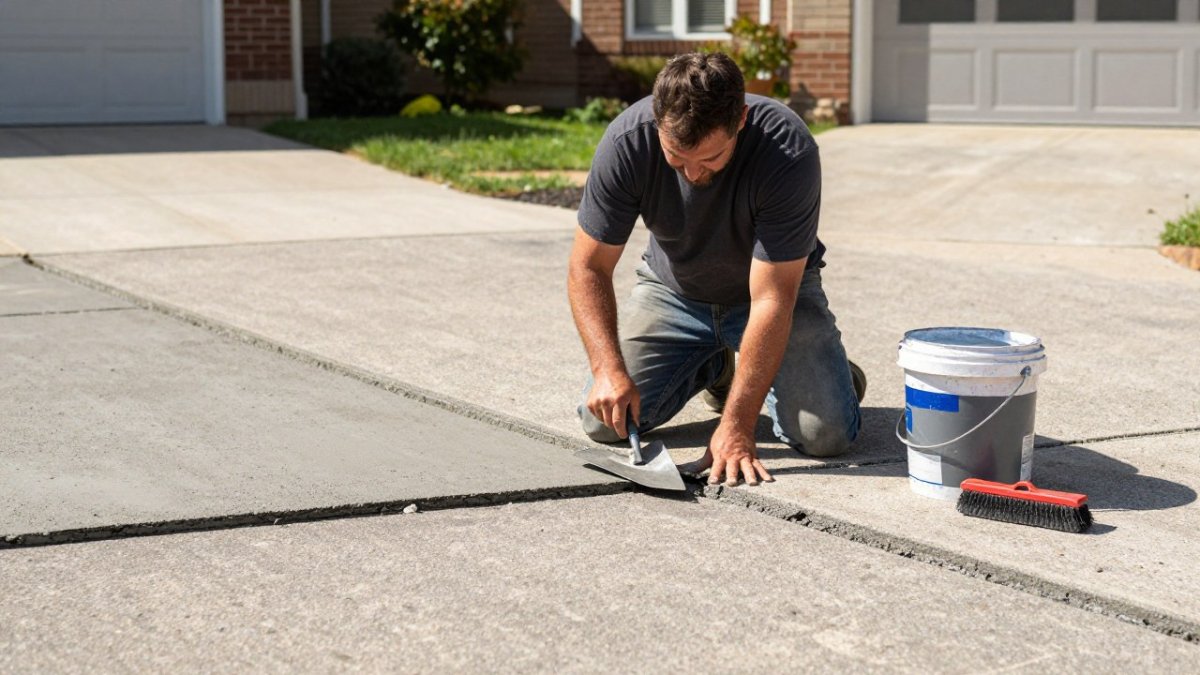
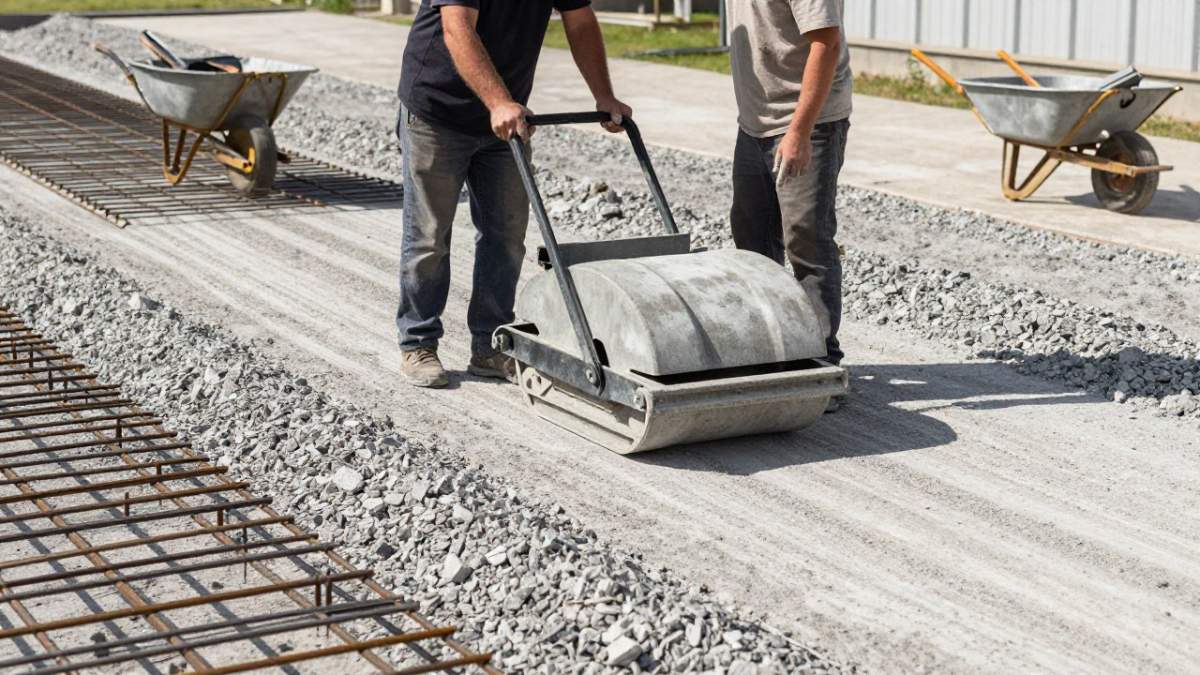
Most parking pad failures start underground, not in the concrete. A weak or poorly drained subgrade lets the slab settle and crack no matter how good the mix is. Poor drainage is the quiet killer. Water trapped under a slab softens the base, and the concrete above pays the price.
Concrete Parking Pad Cost: What Drives the Number
Concrete parking pad cost depends on square footage, thickness, reinforcement, site access, and how much prep the ground needs. Pricing depends on quantity, dates, and delivery, so contact BK Concrete LLC for a quote. We do not quote from a generic price sheet, because two pads the same size can need very different prep. For a clear picture of how fixed pricing works before you commit, read our guide to fixed price concrete quotes.
Concrete Parking Bumpers and Wheel Stops: Protecting the Pad
Concrete parking bumpers and wheel stops keep vehicles from rolling past the pad edge and protect the slab from impact. They also position cars consistently, which spreads wear evenly across the surface. Wheel stops come in concrete, rubber, and plastic. Concrete lasts longest and matches a poured pad. Rubber and plastic are easier to move and gentler on bumpers, but they wear faster under heavy traffic. For a permanent commercial lot, concrete bumpers are the durable choice.
Installation, Curing, and Crack Prevention
Installation quality decides whether a heavy duty pad lasts or cracks within a season. Control joints guide where the concrete cracks as it cures, so those cracks stay small and hidden. Proper curing keeps the slab from drying too fast and losing strength. We cut joints on schedule, cure the surface, and seal it to slow moisture and salt damage. Choosing the right crew matters as much as the mix; our guide on commercial flatwork contractors covers what to look for before you hire.
Calculate Your Heavy Duty Parking Pad Estimate
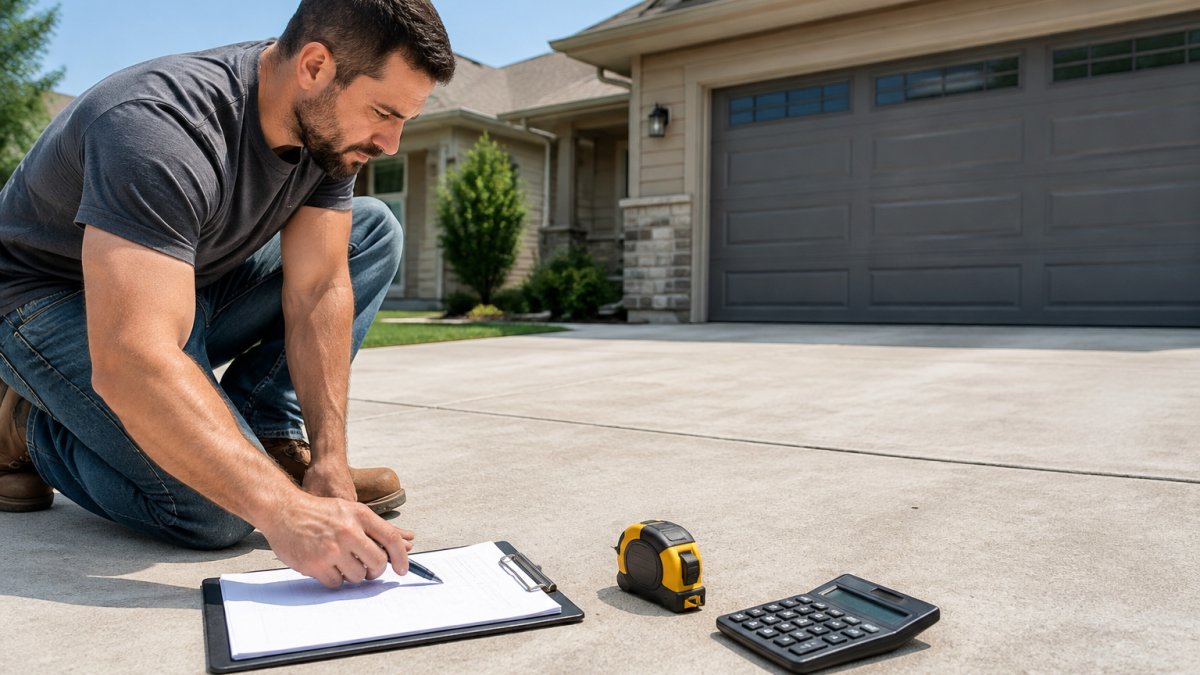
Getting a real number starts with your site, your vehicles, and your timeline. A ballpark estimate gives you a starting point, but the final price depends on prep and specs. If you are pricing a replacement, our guide on getting a concrete driveway replacement quote walks through the process. To see the full range of what we build, review our concrete paving services. Then use our online estimator for a quick ballpark on materials and labor.
A heavy duty parking pad only performs as well as the prep, mix, and installation behind it. If you are tired of patching cracks and want a slab built to carry real weight, BK Concrete LLC handles site prep, grading, rebar reinforcement, and precision finishing from start to finish. Use our interactive cost estimator to get a quick ballpark, then lock in a fixed quote before work begins. Get started with BK Concrete LLC and build a pad that holds up for years.
Frequently Asked Questions
How thick should concrete be for a heavy duty parking pad?
For passenger vehicles, 5 to 6 inches of reinforced concrete is standard. Pickup trucks and light commercial vans call for 6 inches with a 4,000 PSI mix. Heavy delivery trucks, dumpsters, and fire lanes typically need 7 to 8 inches with rebar or mesh and a 4,500 to 5,000 PSI mix. Thickness should always be paired with a compacted gravel base of 4 to 6 inches, because concrete parking pads fail when the subgrade shifts underneath them.
Does a commercial concrete parking pad need rebar?
Most commercial concrete parking pads benefit from reinforcement. Rebar or welded wire mesh controls cracking and helps the slab carry point loads from tires and equipment. For heavy vehicles, a grid of #4 rebar set on chairs at mid-slab depth is common. Fiber reinforcement can be added to reduce plastic shrinkage cracks, but it does not replace structural steel in a commercial concrete parking pad thickness designed for truck traffic.
How long should concrete cure before vehicles can park on it?
Foot traffic is usually fine after 24 to 48 hours. Passenger cars should stay off the pad for about 7 days, and heavy trucks or loaded equipment for 14 days or more. Full design strength develops at roughly 28 days. Curing compound or wet curing during the first week matters, especially in hot or windy weather, because fast moisture loss is a leading cause of surface cracks in heavy duty concrete parking pads.
What affects concrete parking pad cost the most?
Thickness, reinforcement, and site prep drive most of the number. A thicker slab with rebar and a deep gravel base uses more material and labor than a basic pour. Grading, hauling off old concrete, drainage corrections, and permit requirements also add to concrete parking pad cost. Because pricing depends on square footage, load requirements, and site conditions, the fastest way to a real number is a professional estimate based on your actual measurements.