 how-to
How to Estimate Small Driveway Replacement Costs
Last Updated: November 5, 2026
Quick Summary
A small driveway replacement typically costs more per square foot than a large one, because fixed costs like mobilization, demolition setup, hauling, and permits are spread across less area. Total cost depends on driveway size, thickness, material choice, demolition effort, access, and site preparation. Comparing itemized written quotes gives the most reliable picture of the driveway replacement cost.
- Fixed costs such as mobilization, hauling, and permits barely change with driveway size.
- Per-square-foot prices generally fall as a driveway gets larger.
- Most residential drives use 4 inches of concrete, though heavy vehicles may need 5 or 6.
- Tight access, buried utilities, and poor soil can add significant labor time.
- Compare quotes line by line, since a much lower bid often omits removal or base work.
Table of Contents
- What a Small Driveway Replacement Actually Includes
- Driveway Replacement Cost Per Square Foot for Small Driveways
- How Driveway Size and Dimensions Change the Total
- Material Choice: Concrete, Asphalt, Gravel and Pavers Compared
- Cost to Remove and Replace a Concrete Driveway
- Driveway Site Preparation and Grading Cost
- Using a Driveway Replacement Cost Calculator and Reviewing Quotes
- Frequently Asked Questions
What a Small Driveway Replacement Actually Includes
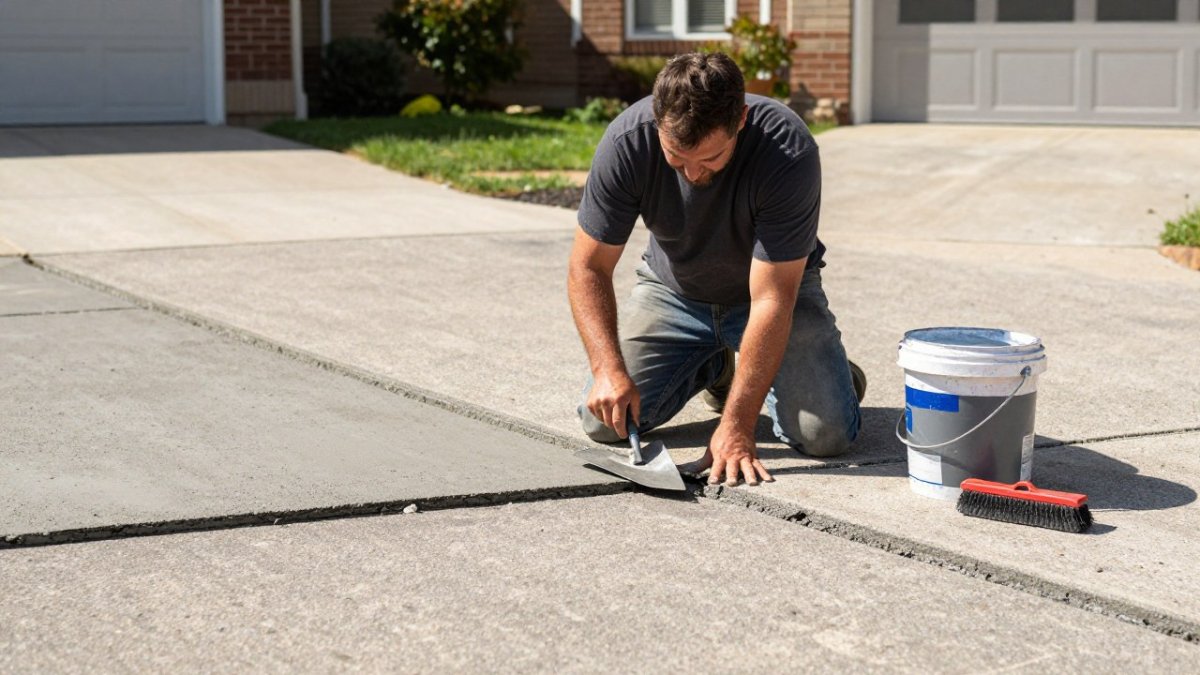
Most homeowners think a driveway replacement means pouring new concrete over the old surface. That is only part of the job. A full small driveway replacement usually covers demolition, removal, hauling, base preparation, forming, pouring, finishing, and curing.
Here is what a typical small driveway project includes:
- Demolition and removal of the existing surface
- Hauling and disposal of old material
- Grading and site preparation to create a stable base
- Subbase and base layer placement for drainage and support
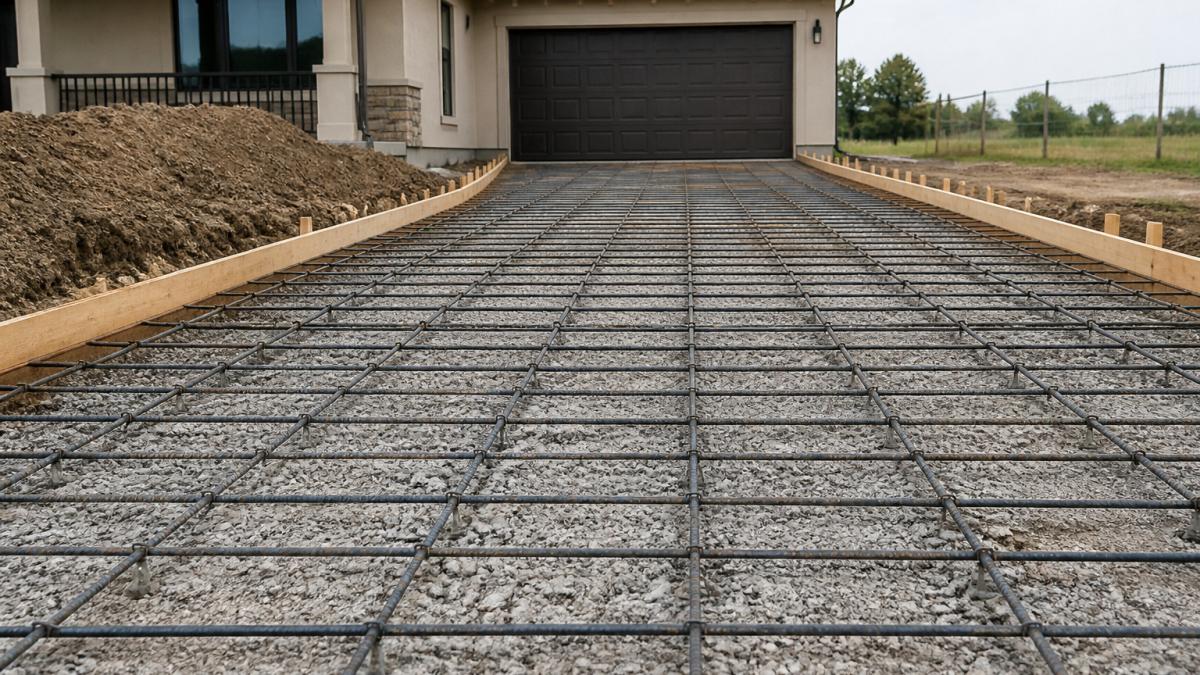
- Forming, reinforcement, and pouring
- Finishing and curing
Skipping any of these steps can shorten the life of your driveway. Some quotes look low because they leave out removal or base work. Ask your contractor to list each item so you can compare quotes fairly.
Driveway Replacement Cost Per Square Foot for Small Driveways
Small driveways almost always carry a higher cost per square foot than large ones, and the reason is structural, not a contractor upcharge. A replacement job has a fixed-cost floor: mobilizing equipment, saw-cutting and breaking out the old slab, setting forms, scheduling inspection, and hauling debris all take roughly the same effort whether the driveway is 300 square feet or 900 square feet. Spread that floor over fewer square feet and the unit price climbs.
A useful way to see it is to split the bid into three buckets:
- Fixed costs, mobilization, demolition setup, dumpster or hauling minimum, permit and inspection time, cleanup. These barely move with size.
- Variable costs, concrete or asphalt volume, base stone, rebar or mesh, form lumber, finishing labor. These scale with square footage and thickness.
- Condition costs, soft subgrade, roots, utility conflicts, tight access, steep slope. These are site-specific and can hit a small job as hard as a large one.
On a compact one-car driveway, the fixed bucket can easily dominate the bid. That is why two neighbors with driveways of different sizes sometimes get quotes that are closer than the square footage suggests. The per-square-foot price generally falls as a job gets larger, because fixed costs are spread across more area.
The larger driveway costs more in total but generally less per square foot, because fixed costs are spread over more area. Understanding that gap is useful when you compare bids.
Ask each contractor to price the same line items so the bids are actually comparable.
Get a written, itemized quote for your site, and confirm what is included in the fixed costs before you sign.
How Driveway Size and Dimensions Change the Total
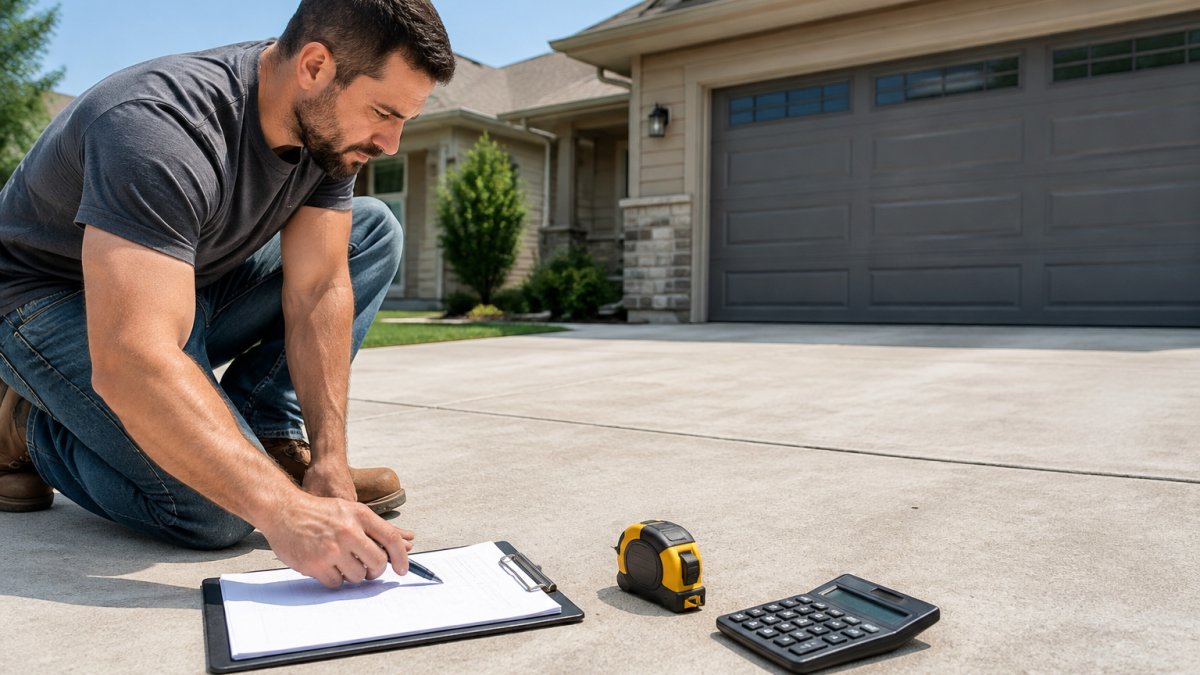
Length, width, and thickness all affect the final price. Multiply length by width to get square footage, then multiply by the planned thickness to get the concrete volume. A driveway that is 10 feet wide and 40 feet long covers 400 square feet. Increasing the width to 12 feet adds 80 square feet, which adds material, labor, and finishing time.
Slope and shape matter too. Curves, turnarounds, and tight corners slow crews down. A straight rectangle is usually the cheapest shape to build.
Thickness is another factor. Most residential drives use 4 inches of concrete, but vehicles that carry heavy loads may need 5 or 6 inches. Thicker slabs cost more because they require more material and sometimes more reinforcement.
Material Choice: Concrete, Asphalt, Gravel and Pavers Compared
Material choice changes both upfront cost and long-term maintenance. Here is a quick comparison:
- Concrete: Durable and low maintenance. Higher upfront cost, but it lasts for decades with proper care.
- Asphalt: Usually cheaper to install. It softens in heat and needs sealing and periodic repaving.
- Gravel: The lowest installation cost. It needs regular raking and topping off.
- Pavers: Attractive and repairable one piece at a time. Installation labor is often higher.
- Permeable paving: Lets water drain through. Useful where local rules limit runoff, though it costs more to install.
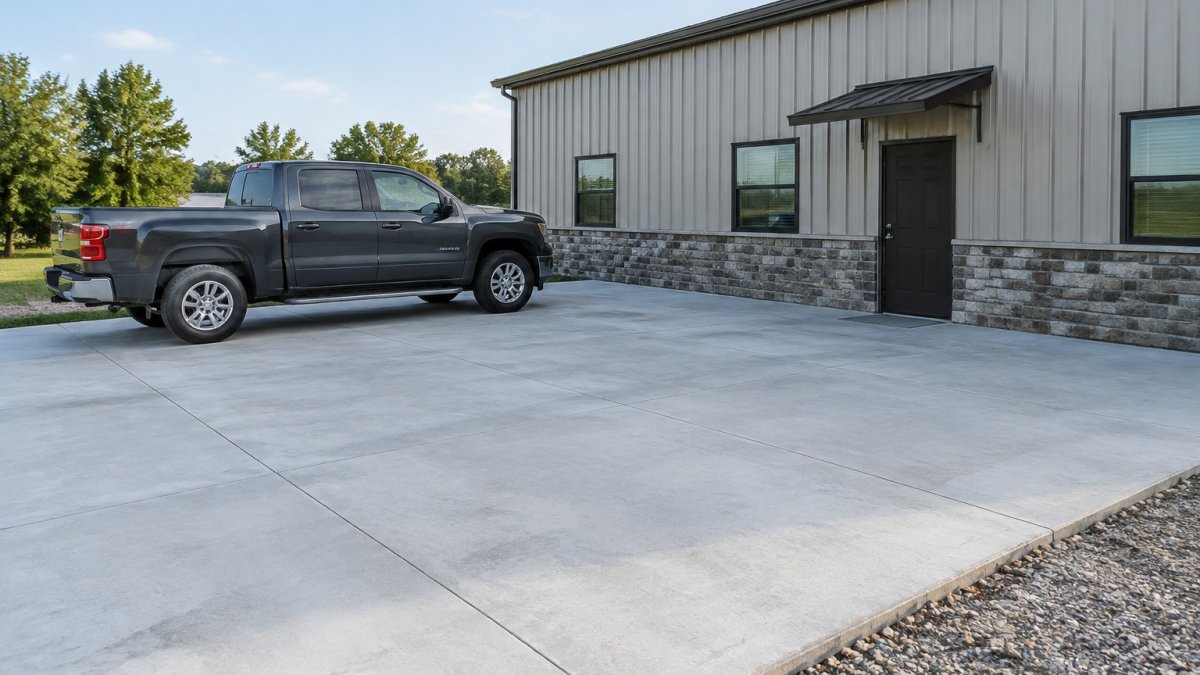
Concrete is a durable option for many driveways, particularly when it is properly reinforced and sealed.
Here is how the main driveway materials compare on cost and upkeep:
| Material | Upfront cost | Maintenance |
|---|---|---|
| Concrete | Higher upfront | Low; lasts decades with care |
| Asphalt | Usually cheaper | Sealing and periodic repaving |
| Gravel | Lowest installation | Regular raking and topping off |
| Pavers | Higher labor | Repairable one piece at a time |
| Permeable paving | Costs more to install | Lets water drain through |
Cost to Remove and Replace a Concrete Driveway
Removal is where small-driveway budgets most often surprise homeowners. Demolition cost depends on effort and disposal as well as square footage.
The removal line in a bid typically bundles four things:
- Cutting and breaking, saw cutting at the edges and joints, then breaking the slab with a jackhammer, breaker, or skid-steer-mounted hammer.
- Reinforcement handling, cutting and pulling rebar or wire mesh, which slows crews on older, heavily reinforced slabs.
- Loading and hauling, concrete is heavy, and disposal is usually charged by weight or by the load, with a dumpster or hauling minimum on small jobs.
- Site protection and cleanup, protecting landscaping, lawns, and siding from debris, then sweeping and hauling off the last of it.
Access is the hidden multiplier. If a truck or skid steer cannot reach the driveway, crews hand-carry broken concrete and wheelbarrow new material, and labor time climbs fast. Narrow side yards, fences, retaining walls, parked cars, and overhead branches all push a small job toward hand work. Buried utilities, irrigation lines, and tree roots near the slab add time for locating, cutting, and repair.
Replacement cost also depends on what the old slab was hiding. A failed base, soft or expansive soil, or poor drainage means excavation goes deeper and new base stone goes in thicker, costs that never show up in a per-square-foot estimate.
Repair, Resurface, or Replace?
Before pricing a full replacement, decide whether the slab actually needs one. Practical criteria most contractors use:
- Cracks, a few hairline cracks can be sealed or patched. Widespread cracking, offset cracks, or cracks that return after patching point to a base or drainage problem that resurfacing will not fix.
- Surface condition, spalling, scaling, and surface wear can sometimes be resurfaced. If the slab is sound underneath, an overlay can buy years at a fraction of replacement cost.
- Base condition, if the slab rocks, settles unevenly, or heaves seasonally, the base is failing and a new surface will fail with it.
- Drainage, ponding water or runoff toward the house usually means the grading is wrong, which resurfacing cannot correct.
- Remaining life, a slab that is otherwise sound but cosmetically worn is a resurfacing candidate. A slab that is cracked, settled, and poorly drained is a replacement candidate.
Resurfacing a slab with a failing base often leads to repeat repairs. If the underlying problem is settlement or drainage, the overlay will crack on the same pattern within a few seasons.
Ask your contractor to state in writing what demolition includes, cutting, reinforcement removal, hauling, disposal fees, and site protection, and to note any access or utility issues found during the site visit. That single line item is where small-driveway bids diverge most.
Driveway Site Preparation and Grading Cost
Site preparation is often the most overlooked cost. Before any concrete goes down, the ground must be excavated, graded, and compacted. The base must slope gently away from the house so water drains properly. Poor preparation causes cracks, heaving, and early failure.
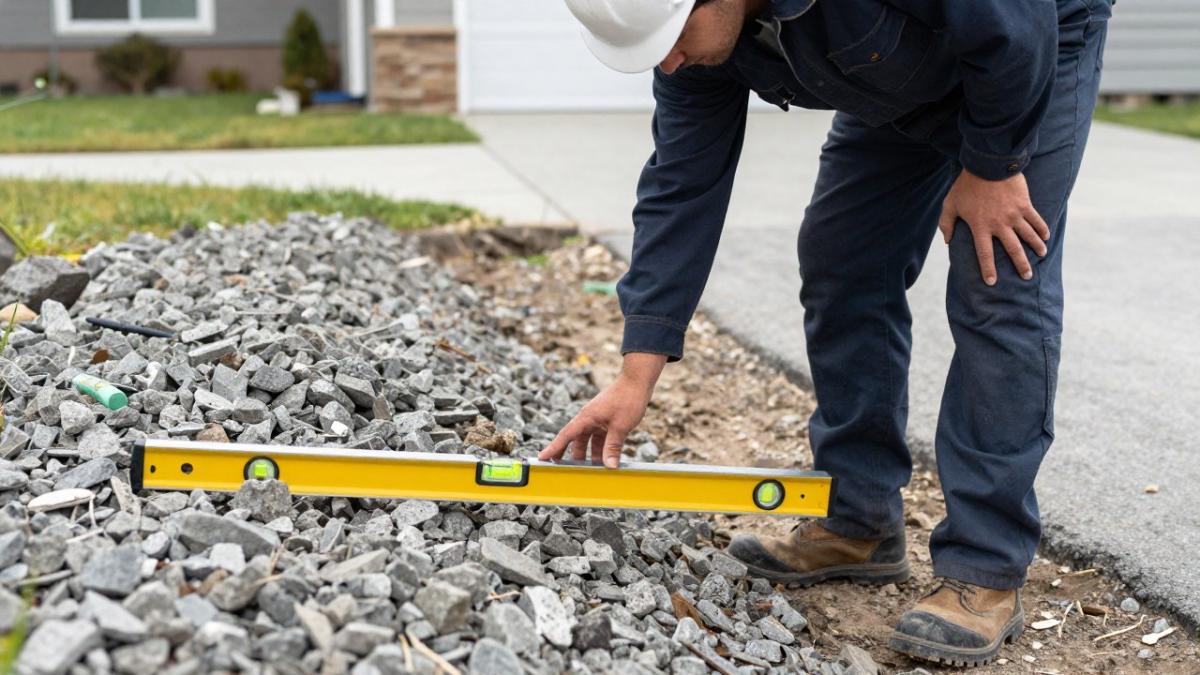
Site preparation typically includes:
- Excavation to the correct depth
- Gravel or crushed stone base installation
- Compaction with a plate compactor or roller
- Grading to ensure proper slope and drainage
- Removal of soft soil, roots, or debris
Hidden access costs can also add up. Steep grades, tight property lines, buried utilities, and poor soil all require extra time. Before you sign, ask the contractor to inspect the site and note any access or soil issues in writing.
Using a Driveway Replacement Cost Calculator and Reviewing Quotes
An online calculator gives you a rough idea of cost. BK Concrete LLC offers an interactive estimator to help you start planning. A calculator cannot see your soil, slope, or access, so treat its result as a preliminary figure, not a final price.
When you compare written quotes, check these items:
- Does the quote include demolition and disposal?
- Is base preparation and grading listed separately?
- What thickness and reinforcement are included?
- Are permits and inspections covered?
- Is the warranty clearly stated?
Watch out: a quote much lower than the others often leaves out a required step. Ask each contractor to price the same scope so you compare apples to apples.
If you are ready to move forward, start with our Residential Concrete Driveway Cost Estimator to run your own numbers. Then review our guide to getting a concrete driveway replacement quote before you request bids. Once you have a quote, check our guide on how to avoid contractor price escalation so the final bill matches the estimate.
Frequently Asked Questions
How much does it cost to replace a small concrete driveway?
A small concrete driveway replacement is priced by square foot, so the total depends on the area, the thickness specified, the condition of the existing surface, and local labor rates. Because pricing varies by project, BK Concrete LLC does not publish fixed prices for this work. Measure the length and width of your driveway to get the square footage, then request a written quote that itemizes removal, base preparation, concrete, reinforcement and finishing. Compare line items rather than just the bottom-line number so you can see what each quote includes.
What factors affect the cost of driveway replacement?
The main cost drivers are driveway size, the material selected, removal and disposal of the old surface, site preparation and grading, drainage needs, access for equipment, and the thickness and reinforcement specified. Small driveways often carry a higher cost per square foot because mobilization, forming and finishing work do not shrink in proportion to area. Clear access and a level subgrade can reduce the total, while poor drainage or soft soil typically adds scope.
Does driveway size affect the cost per square foot?
Yes. On a small driveway, fixed costs such as delivery, equipment setup, forming and crew time are spread over fewer square feet, which usually raises the effective cost per square foot. Larger projects can take advantage of volume efficiencies. Ask any contractor to show how the per-square-foot rate changes with the area, and confirm whether minimum charges apply to small jobs.
Can I use a driveway replacement cost calculator for an accurate estimate?
A driveway replacement cost calculator is useful for a ballpark figure, especially when you enter accurate dimensions and the material you are considering. It cannot see site conditions such as soft subgrade, buried utilities, slope or drainage problems, so treat its output as a starting point. BK Concrete LLC offers an online estimator for a preliminary range, and a final price is confirmed only after an on-site review of the project.
Get your small driveway project started with BK Concrete LLC. Our crews handle site preparation, grading, and rebar reinforcement, and our online estimator gives you a clear starting number. Calculate a job estimate today and get a written quote built for your site.